Author Interview – Ligia De Wit

Contemporary Magical Realism Author

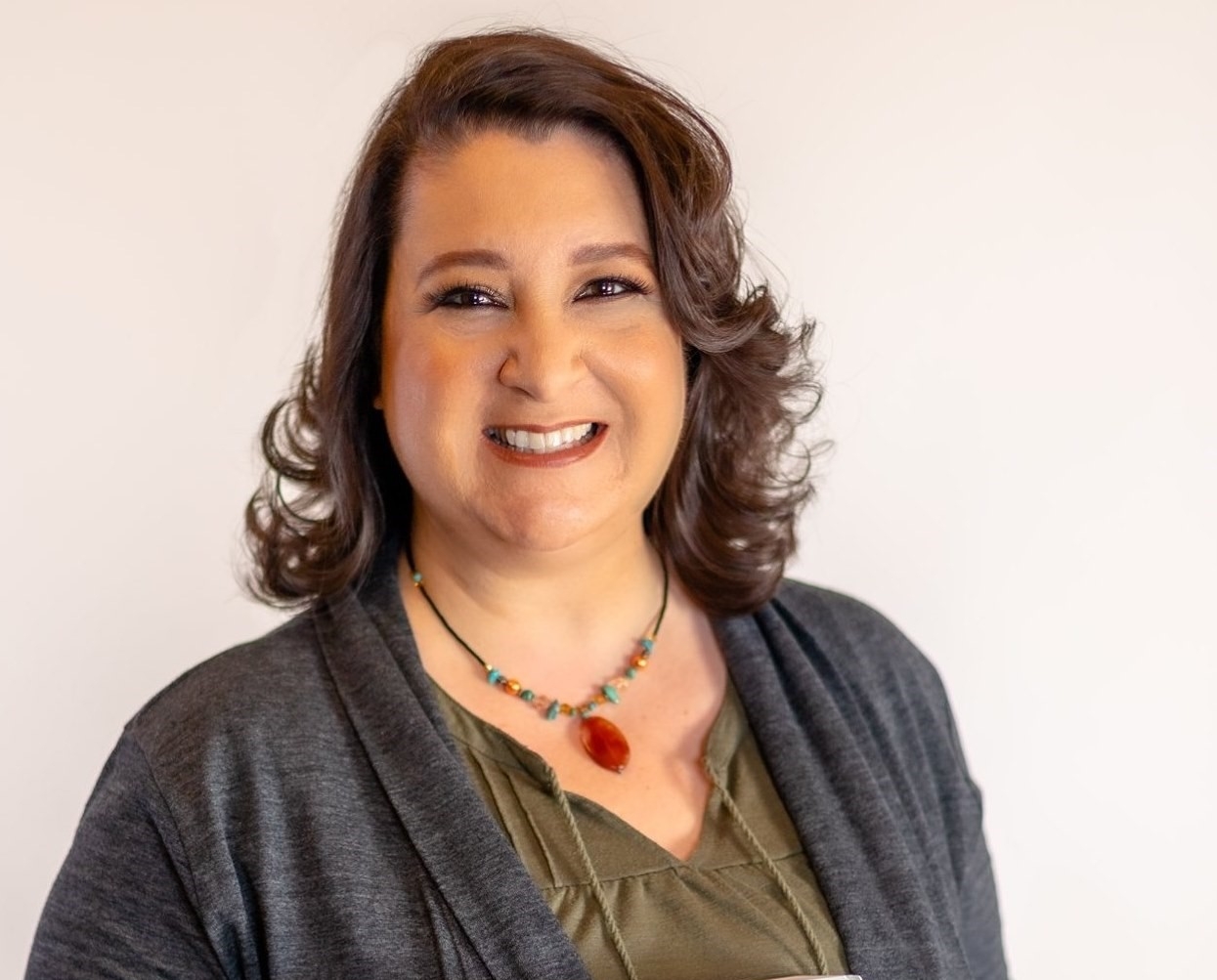
It’s time to meet author, Ligia de Wit and find out about her writing journey and her book Seven Hundred Beachfront.

Helen: Welcome, Ligia. It’s a pleasure to meet you. I’m really intersted to hear about your book, Seven Hundred Beachfront.

Ligia: Seven Hundred Beachfront is a contemporary magical realism story set on the beach. Because we all need some beach in our lives, don’t we? It follows a young woman who’s used to being alone and doing everything by herself. She believes she doesn’t need anyone, so she pushes people away. But life has a funny way of placing the right people in your path, even if they come in unexpected forms: a five-year-old kid, a grumpy neighbor, and a sentient house who is even grumpier. So, three grumpy souls and one beam of sunshine. At its core, the story is about abandonment. About forgiving those who don’t deserve it. About letting go of pain—the kind that lingers right behind you, even when you pretend not to see it. It’s also about love. Not just romantic love (though that’s there), but brotherly love and self-love. About giving yourself permission to face that darkness and decide enough is enough. To tell yourself you are worthy of love. And yes, there’s grumpiness. And laughter. And moments of levity that stretch like a tarp over heavier things. Because sometimes, that’s just how life works.

Helen: You had me at Sentinent house. I love inanimate objects having an opinion. What were your thoughts behind you cover?

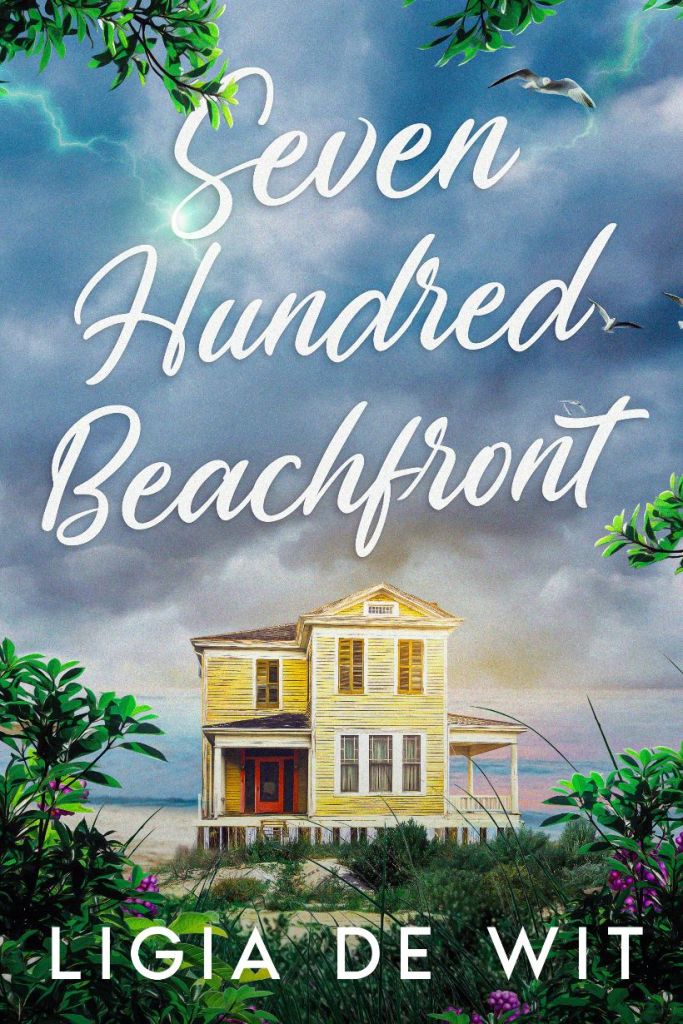
Ligia: Setting can be a strong part of a story. In Seven Hundred Beachfront, it is the story. Most of it takes place inside a dilapidated house, so the house is integral to everything. Did I mention the house is sentient? It even has a name. I always knew I wanted the yellow house right at the front. It’s stormy because it reflects the pain and hardship. There are seagulls to echo the sound of the beach. And of course, a touch of green lightning—something that’s part of the story and hints at the magical realism woven throughout.

Helen: There is always more than meets the idea behind book cover designs. I love the attention to detail you had when designing this cover. What made you writte this particular book?

Ligia: This might be my most personal book, one that reflects part of the hurt I carried growing up. Bev, the FMC, embodies that in many ways. But it also offers hope. That no matter how dark your life might feel, no matter that some things may never be fixed, you can still make magic happen in your own life. I wrote this when I was just starting to write again after a 20+ year hiatus, at a time when I didn’t think I was good enough. And because of that, I wrote this story non-stop.

Helen: I’m glad you found your way backing to writing. For me it is a passion, I just love writing. Do you listen to music when you write, if so, what do you listen to and why?

Ligia: Music has always been part of my life, so yes—I listen to it when I write. But it’s a complement, a minor character, not the main one. It has to blend with my mood as I work. I usually go for a chill playlist, something that stays in the background and lets the story take center stage. Right now, as I’m working on a very important part of my WIP, I’ve been listening to Ludovico Einaudi.

Helen: I love Einaudi! I listen to a lot of classical music when I write. How do you get the ideas for a new book?

Ligia: Great question! I pull them from the air, mold them with sand, and infuse them with a little pixie dust—and voilà, a book. Okay, kidding… but not really. It can feel that way. I get inspired by movies or books that move me deeply, and my brain immediately starts chanting what if… That’s usually where it begins but it’s only a small piece of it. I dream stories while I’m awake. They come to me (hence the “pulling them from the air”), and I shape them until I have no choice but to pour them onto the keyboard. The real spark happens then. I usually don’t have much at the start, but as I write, the scenes unfold, the characters come alive with vivid clarity: their struggles, their passions…And I get so excited I can’t stop typing. It’s beautiful.

Helen: I think ‘what if’ are two of the most important words for writers. If we didn’t ask these questions our stories would never happen. What are you working on now?

Ligia: Redemption of Faete is book four—and the final installment—in my Bradaís Pledge series. It’s a contemporary-to–second-world adventure filled with danger, immortal pirates (definitely not your typical ones), fae mentors shaped more in the Tolkien vein, and a human who begins the series naïve and a bit immature (lovely so—I’m in my 50s and still immature in some areas, so I wanted to represent that!). What I love most about this series is how both main characters grow—the immortal pirate and the young seer—and how the stakes rise with each book.
This final installment is intense. It’s the end, after all. There’s found family, love lost (and found again; this is a HEA series), dragons meddling, and powerful gods trying to destroy their reality. It’s absolute chaos. Wonderful chaos.I’m currently in the middle of a major revision after receiving developmental edits, and it’s been so exciting to create new scenes and find even more ways for my heroes to complicate their lives.

Helen: Oh that sounds wonderful, chaos and dragons, what more can you ask for? Tell us a little about the protagonist in your story.

Ligia: This is a dual-POV series. I first wrote it from Ryanne’s perspective. Unlike many heroines, she starts with no real power—just some silly visions. At the beginning of book one, she’s a bit absorbed in her own world and hasn’t quite realized what it means to have a fae mentor and a brave pixie as her guardian. I wrote her because she—and the pixie—came to me one Sunday morning at 6 a.m. and demanded I write her story. I swear it’s true. I relented at 7 a.m. and wrote her first chapter, where she told me everything. I fell in love with her silliness (I’m pretty goofy too) and her personality. Then came Titus—a bloodthirsty pirate who can’t find peace because he’s controlled by his creator. Oh man, do I love Titus. It’s been an absolute pleasure to be in his head and watch his growth, especially in this last book. Why did I write him? In my first draft, he went out for coffee while Ryanne was trying to avoid the pixie—and drink far too much coffee (he’s addicted). I saw him there—worried, determined—and I knew I needed to understand him better. His story flowed from my fingers so easily.

Helen: What is the best thing that has happened to you since you began writing?

Ligia: Readers. Hands down. When I first started writing, I did it simply because I couldn’t stop (I have several drafts from that time that will never see the light of day as proof!). I loved creating stories, building worlds, and bringing characters to life. But then those characters made their way out into the world. Readers found them—and fell in love with them and their stories. And honestly, that’s more than enough reason to keep going.

Helen: I’m glad enthusiatic readers found your books. Thank you so much for joining me today. It’s been great learning more about your books. Most authors are also great readers. Just to close us out do you have any book recommendations for us?

Ligia: Reading is part of the writing life. Honestly, like most people, it’s been part of mine since I was seven years old. I can’t imagine a life without reading (please tell me heaven has a library… I need that). For epic fantasy, I’d recommend Khyven the Unkillable by Todd Fahnestock. It’s book one in a five-book series, and I recently finished the final installment—which is actually influencing the writing of my own last book. For a debut author—also epic fantasy, with wolves (not fantasy romance, very important!)—A Bird Among Wolves by Tracy Leonard Nakatani. Amazing. And for fantasy romance: Soulfire Blue by Jesse Sprague. It’s currently on Kickstarter as a gorgeous special edition, with art illustrated by the author herself.

Helen: Oh these sound really interesting. More for the TBR pile! Thank you for sharing.

About the Author – Ligia de Wit

Ligia de Wit writes fantasy romance adventures with heart, humor, and just the right dose of magic. A lifelong romantic with a soft spot for fairy tales and found family tropes, Ligia writes characters who are strong in more than just a physical sense. Her characters face fears, fight for themselves, and find love in the most unexpected places.

When she’s not writing (or rewriting) her imaginary worlds, she works for a global distribution company and dreams up stories during lunch breaks. You’ll often find her with her nose in a book, exploring a new city, hiking through forests, or acting like a total goof at theme parks. She’s a proud kid at heart—and owns it.

Follow Ligia on social:

Purchase Seven Hundred Beachfront by Ligia de Wit

UK: eBook | Paperback
USA: eBook | Paperback

As an Amazon Associate I may benefit from purchases made using these links.

If you enjoy epic fantasy then check out my award winning Sentinal series, which is now complete. If you like fantasy books with a touch of romance then you will love my SoulMist series, start with SoulBreather. Prefer Dystopian Science Fantasy? Then try Harmony. Start the adventure and stay for the journey.

Sign up to my newsletter and download a free novella called Sentinals Stirring and get notified when my next books are published.

By clicking the sign up button above, you agree to share your email address with the site owner and the newsletter platform provider to receive marketing, updates, and other emails from the site owner. Use the unsubscribe link in those emails to opt out at any time.

By signing up to my newsletter, you agree to receive commercial information from Helen Garraway, located at 61 Bridge St, Kingston, Hertfordshire, UK (Data Administrator). You can withdraw your consent at any time. The data will be processed until the consent is withdrawn.
Author Interview – Suzanne Furness

YA Fantasy Author

It’s time to meet YA Fantasy author, Suzanne Furness and find out about her books.

Helen: Welcome, Suzanne. It’s a pleasure to meet you. Tell us about your latest book.

Suzanne: Storm of Clocks is a middle grade fantasy set on the stunning North Cornish Coast around Tintagel Castle.

It is perfect for readers of 8 and upwards. I know of at least one 96-year-old lady who loved it!

Eleven-year-old Livvy’s life is torn apart the night her dad dies in an accident and her brother stops talking. A tiny piskie with BIG secrets bursts into her world warning a storm will cause massive destruction to her town. However, the storm could reverse an ancient curse that will herald the return of giants. Livvy must follow her new piskie friend, Patsy, into a hidden world of folklore and legend to discover dangerous creatures lurking in the bushes and magical birds that soar overhead. It’s a story of loss, friendship and hope.

The clocks are ticking . . . The skies are darkening . . . The storm is approaching . . .

Storm of Clocks was short listed in 2025 for the Holyer an Gof Award. An annual award for the best books promoting Cornwall, set in Cornwall or written in the Cornish language.

Helen: Such a beautiful coastline. With all the myths and legends in Cornwall, I bet you had great fun writing this book. What were your thoughts behind you cover?

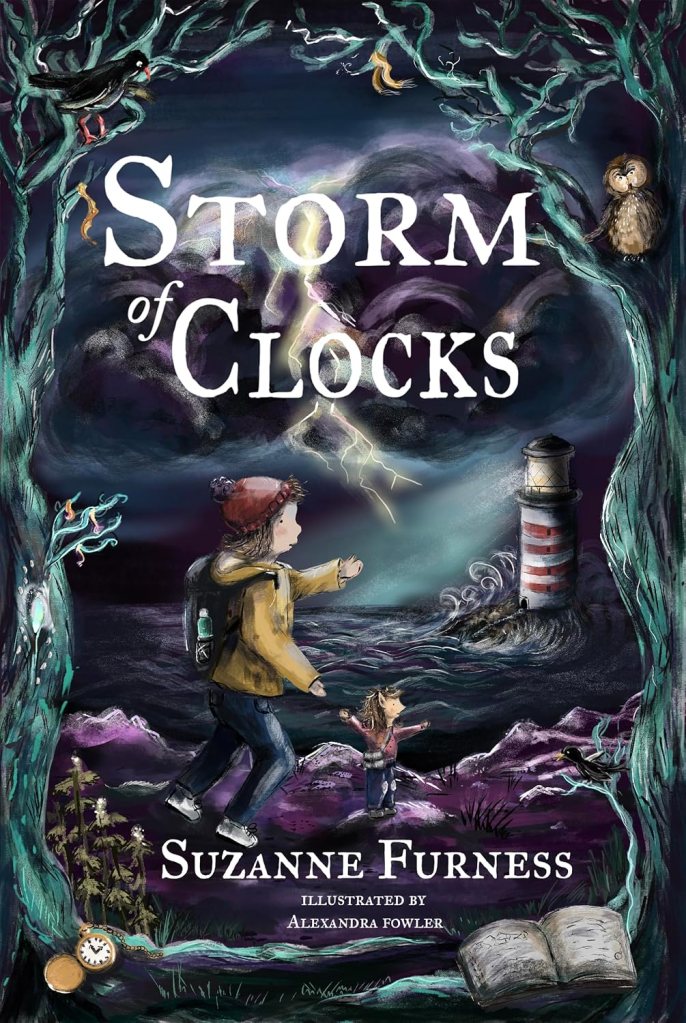
Suzanne: I simply LOVE this cover. Big thanks to my fabulous illustrator, Alexandra Fowler. Alex and I were able to meet up and discuss my vision as she lives very close to me in Cornwall. I wanted to have Livvy and Patsy (the piskie) standing on the cliff top as the storm began. The lighthouse was Alex’s idea as we thought it would add a highlight. I think it works really well with the waves crashing over it. I then suggested the lightning streaks which Alex was able to incorporate into the title. The frame of the cover is a tree which features in the story (no spoilers here you will have to read the book!). Alex has cleverly hidden other clues to things in the story amongst the tree and other plants. Look closely for a pocket watch, a book, and the birds. Flip the book over to find a deer and a pair of eyes lurking in the bushes!

Helen: There so much detail in your cover, I love learning what all the images mean! I assume Livvy is on the cover, tell us more about her.

Suzanne: The main protagonist is an eleven-year-old girl called, Livvy. Short for Olivia. We learn she lost her father in a car accident which resulted in her younger brother, Ed stopping talking. Obviously a very tricky time for Livvy. The story is set several months after the accident as Livvy is learning to manage some of her feelings. Then she finds Patsy Scribble a Cornish Piskie in the compost heap and her life changes again. Livvy grows through the story and starts to see that her life can move forward but she can still keep a piece of her dad in her heart. This might seem a sad story but in fact it is uplifting and contains lots of hope. It’s an adventure that changes her forever.

I experienced the loss of my dad at a young age too. Different circumstances but the feelings and heartbreak were the same. I hope some of that first-hand knowledge comes through in the story. I started writing Livvy’s story shortly after my mum died after a long illness 13 years ago. I think it was cathartic in many ways. The image of meeting a piskie at the bottom of the garden was very strong and the story grew from there. It’s been through lots of editing and rewrites to get it to where it is.

Helen: I also found writing cathartic. I started writing after my mum passed away. Much later in life, but the time was obviously right. My greatest regret is that she never got to read any of my books. Is Livvy your favourite character or is there anyone else you found interesting to write?

Suzanne: Hmm, this is an interesting question because as I have explained above, Livvy is a special character to me. However, I love the feisty piskie, Patsy Scribble. She is definitely not a stereotypical piskie. (In case anyone was wondering a piskie is a Cornish word for a type of pixie.) She comes out with some funny sayings and quite often is a little rude about humans and their world.

There are also three birds in the story. One is the very clever and slightly superior Cornish Chough called Merlin. (Yes, it is an Arthurian reference). He was fun to write too. He doesn’t speak as such but he I tried to portray his character through his behaviour and actions.

Helen: Your characters sound like fun. When did you realise you had a passion for writing?

Suzanne:  I think it’s always been there but maybe I didn’t fully understand it till a lot later on. As a teenager I wrote lots of poetry, which was one of the ways I tried to cope with the loss of my dad and other life events. It was years later that I actually started to think about writing a story. My first attempts were short stories for adults. I entered a few into competitions. One even got published in an anthology. I then tried writing an adult novel. Looking back, I can fully see it wasn’t great but I learnt a lot from those 80K words! I moved onto writing for children shortly after that. I have worked with children for many years as well as bringing up two of my own so it seemed a natural progression for me.

Helen: I think the more you write, the more you practice, the better you get! If you don’t write then there’s nothing to edit or improve. When writing, do you plan in advance or make it up as you go?

Suzanne: I have to admit I am a pantser through and through! It’s a slightly strange concept for me as in most areas of my life I plan things carefully and I am not a person who enjoys chaos or just going with the flow. Perhaps that’s exactly why I have to let my creative juices do their own thing when writing. I usually start either with a line of writing or a character name and go from there. I might do mind maps and character description cards as I get into the story a bit but other than that it’s just open the laptop and see what happens! Not the most efficient way as it means lots of editing and rewriting but so far it has worked for me.

Helen: I think what works for you is best. Do you find you need to do much research for your books?

Suzanne: Ah, well this is where I might spend a bit of planning time and like many writers, sometimes I find myself down the proverbial rabbit hole of research! But I do enjoy that side of things. With Storm of Clocks I researched Cornish folklore in depth and decided which aspects I could incorporate into the story. Quite often the research helped move the story forward when I got a bit stuck. It was fun to see how lots of things entwined. It’s such a big part of this story I have added a glossary at the back to explain a few things a little more. I have sprinkled the story with a few Cornish words and phrases too which all add to the feel of the book.

Helen: Writers tend to end up knowing so much trivia! What else are you working on?

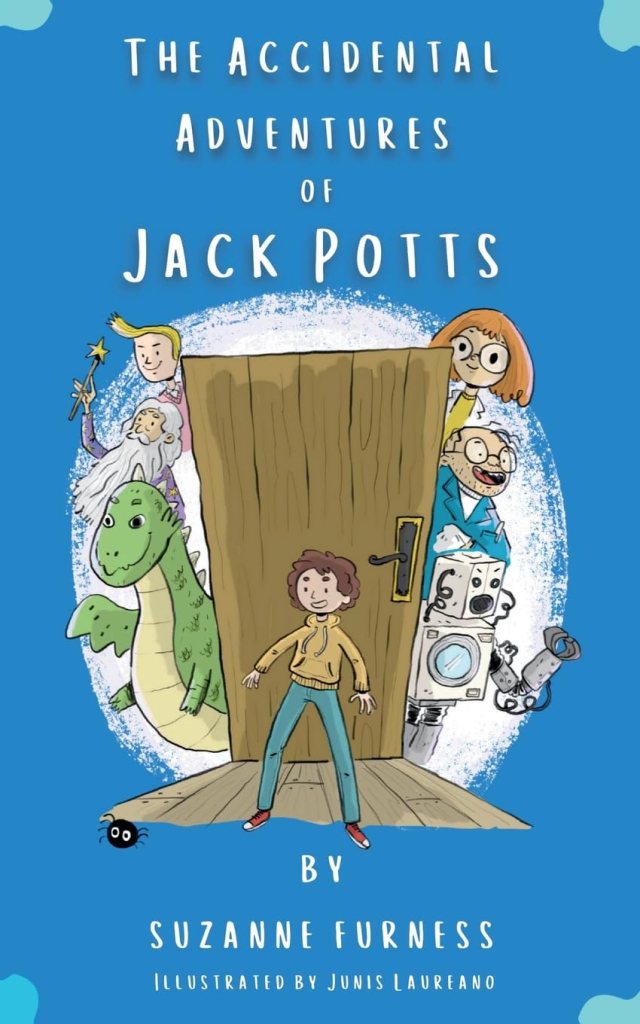
Suzanne: I have a fun and slightly quirky story about a young boy, Jack Potts, who finds a door at the back of his shed which leads to a world known as Underbed Storage! A place where rubbish is treasure and nothing is wasted. He meets a clumsy dragon, a sort of wizard and some rather strange robots. It’s a very different story to Storm of Clocks but The Accidental Adventures of Jack Potts is a fun adventure for readers 7 plus. It’s got lots of fun illustrations too so is ideal for the more reluctant reader or new to chapter book readers. Check out Ink Bookshop or Amazon

I am hoping to be able to share news very soon about a new middle grade story that will hopefully be published later this year. Watch this space or follow my socials for the latest information on that exciting project.

Helen: Thank you so much for joining me today. It’s been great learning more about your books. Is there anything else you’d like to share?

Suzanne: My website is here and I’m always happy to chat so give me a follow or get in touch. I can sell signed books direct and will include bookmarks and stickers so if that is something you would be interested in just get in touch to arrange.

About the Author – Suzanne Furness

Suzanne lives in Cornwall with her husband and a cat with a moustache! She can often be found walking the coastal footpath on the lookout for pirate ships and lost mermaids or exploring woodlands and moors on the hunt for fae. Sadly, she hasn’t found a piskie at the bottom of the garden but she will never stop looking.

Follow Suzanne on Instagram

Purchase Storm of Clocks by Suzanne Furness

UK: eBook | Paperback
USA: eBook | Paperback

Or order through Waterstones The Great British Bookshop Roaming Reads or your favourite indie bookshop.

As an Amazon Associate I may benefit from purchases made using these links.

If you enjoy epic fantasy then check out my award winning Sentinal series, which is now complete. If you like fantasy books with a touch of romance then you will love my SoulMist series, start with SoulBreather. Prefer Dystopian Science Fantasy? Then try Harmony. Start the adventure and stay for the journey.

Sign up to my newsletter and download a free novella called Sentinals Stirring and get notified when my next books are published.

By clicking the sign up button above, you agree to share your email address with the site owner and the newsletter platform provider to receive marketing, updates, and other emails from the site owner. Use the unsubscribe link in those emails to opt out at any time.

By signing up to my newsletter, you agree to receive commercial information from Helen Garraway, located at 61 Bridge St, Kingston, Hertfordshire, UK (Data Administrator). You can withdraw your consent at any time. The data will be processed until the consent is withdrawn.
Author Interview – Ectorius Angel

Author and Poet

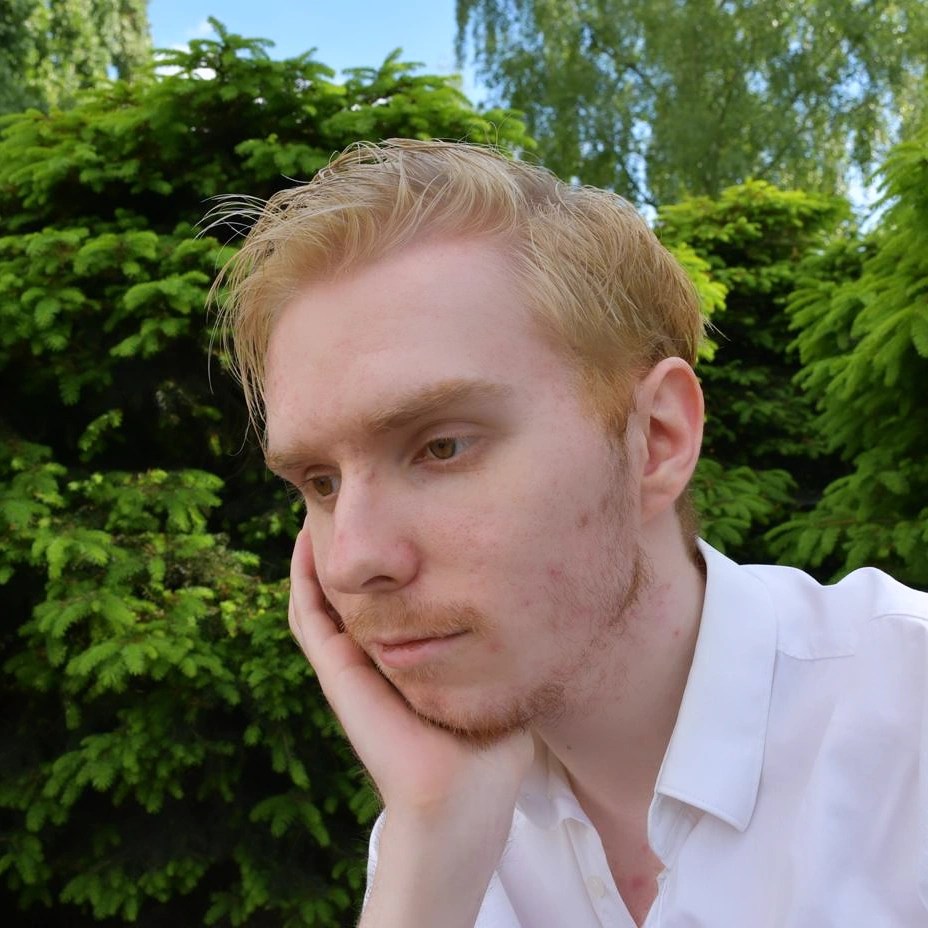
It’s time to meet Author and poet, Ectorius Angel, and find out more his writing journey.

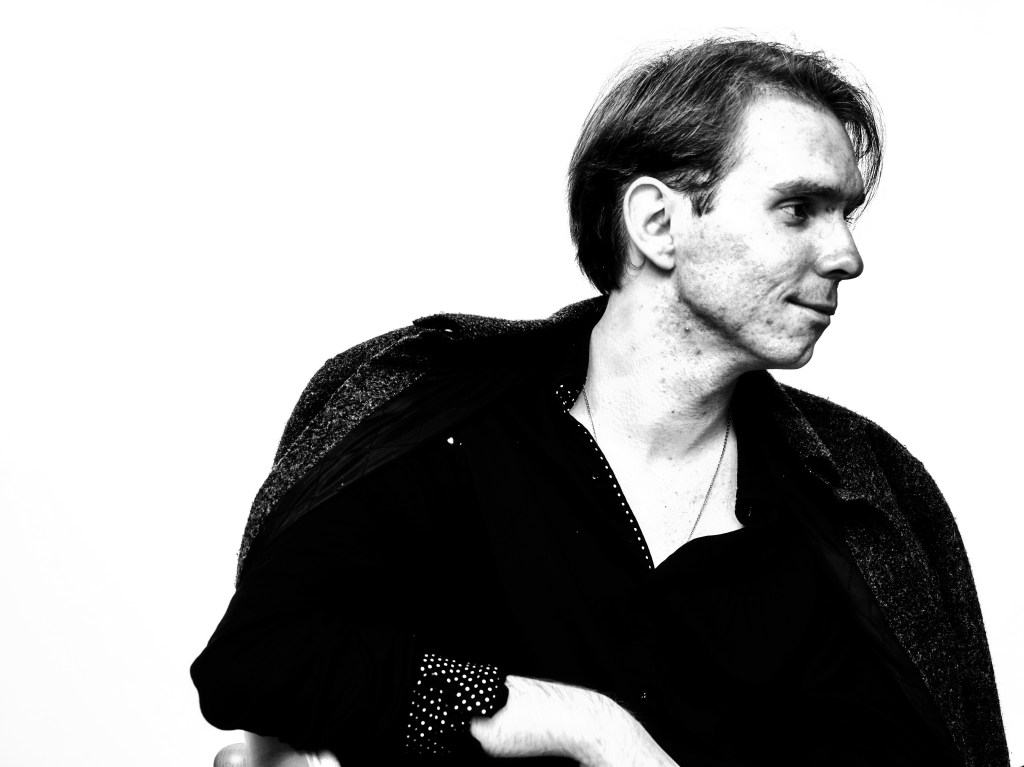
Helen: Welcome, Ectorius. It’s a pleasure to meet you. Tell us about your work.

Ectorius: People keep asking me about a book. I have tried so hard to be honest and say that I do have one, and I do, but it’s one that can’t be published any time soon, in the hands of a lovely publisher called Curious Corvid Publishing. It’s called The Flowers of Hades, and it’s perhaps the roughest, but somewhat also more original works I’ve ever written. I wish I could tell you more about it, let you know what else there is to say, but right now, all I can really say is that it will come when it is time. I wish I could say a lot more about it and my second book, called Remember We Once Lived. A story about Alexander the Great and Hephaestion. That is the most heartfelt, poetic, and truly hardest work I’ve ever written in my entire life. I have cemented over five years of research and archeology, academic research and historical research just to have the general knowledge and understanding of Hephaestion’s and Alexander’s inner lives. These are in the hands of Ravven White of Curious Corvid Publishing right now. However, more than anything, I’m a poet, and I guess, in some way, instead of a current book, I’d of loved to say that I have many poems coming, because there have been quite a lot that has been sent in to poetry journals, magazines, art centers, and so much more. That is my biggest pride to announce, more than any other book. I come from poetry, and poetry is what made me.

Helen: Congratulations on your forthcoming publications, and I bet the waiting for your books to come out is excrutiating. Have you had sight of the covers yet?

Ectorius: I’m sad I can’t really say much here. Covers are something I believe come at the end, once the book has been made ready for publishing. Right now, I don’t really know what it would be like, or what its design will look like just on principle. We have great designers in Curios Corvid, and many others in other publishers and whatnot. So, hopefully, it will be beautiful, and I think simplistic, because that’s what I would like to be.

Helen: How did you come up with the title for your book?

Ectorius: The Flowers of Hades wasn’t its original name. In reality, it was very far from that name. There are characters based off of a lot of other people, but two female characters are based majorly around the bad and the good parts of my partner, Finian, who has been by my side for years. Originally, it was named something entirely different. It had…Four titles, before settling on that. Titles are…They are the body of my work. I know how stories will end, I know how tragedy will come and what I need to suffer through to write it. I never plan, I hate planning, I find it absurd and it makes no sense in any capacity. You write to feel something; you write because you feel. 

Helen: I think everyone has a different way of writing and as long as you continue to love what you do, and you enjoy writing then that is what works for you. What made you write this particular book?

Ectorius: I want you to imagine walking into a bedroom; it belongs to someone you once loved, or knew, or someone you hated. But it still belongs, regardless, to someone. There are books there, clothes, items, things you don’t know much about. It’s the inner life of someone else. Someone you’ll never get to see, and however you feel, never get to resolve anything with. How you feel is up to you, and it’s for nobody to shame. And you stand there, looking, alone, not a word to your mouth, a smile to your face. Just a torn, empty self that can only be ready to get rid of everything to never feel it again. A hatred or a desire to get rid of something so strong. It’s how ordinary people or ordinary writers will never understand why I prefer solitude, why love doesn’t kill loneliness, or the suffocation I feel every day when someone mentions the name of a person I know, or when they tell me “Why can’t you do something so simple?” When my mind is constantly busy, and I easily lose track of things. I’m never there, even in the most important moments; I’m always unreachable. I guess that’s why I wrote the book, why I write anything at all. I can’t live without writing, and I can’t write without suffering living. Every day is a constant wish for an eternal rest without the call of writing in a modern age, but I know that if I stop even once, I’ll want to kill myself here and now, and that is the worst and best thing I have ever been able to say about why I write anything.

Helen: Creating a work of art can be consuming. As always, balance is important. Life feeds creativity and creativity feeds life. If you don’t experience one, how can the other exist? When did you first realise you had such a passion for writing?

Ectorius:  I never really realized it. I was too young to really understand. I knew that some days I’d walk outside in Italy or Germany and I’d just stop. There’d be a bird, or a hawk or a butterfly or even just the light off of the edge of a ledge of another building. The sunlight, the grass, a sway of blades that feels like a caress. I guess to answer the “When” of it, it’d be earlier than I can really remember. So early it just came to me, and by nine, I had a mentor who was a published author of whom I studied under.

Helen: On your writing journey was there anyone who gave you the inspiration to write?

Ectorius:  That’d be my mentor, Jules, and my friends. Ana Monica Banto, Dr. Catherine Sooyun Lee, Iselin Lørentsen, Stefani Stamboliyska-Murffit, Joshua Sell, and James Johnston and Patrick Walsh, now known as Vox Forged as a voice actor. Without them, I wouldn’t really be here. But more than anyone else, it is also Finian Sun, my partner, to whom I owe everything, now and any time in the future. 

Helen: I know you write poetry, but for fiction, which genre do you typically write?

Ectorius:  Romance, historical romance, romantic poetry, travel poetry and in general just contemporary romance. Much of it is to do with the fragility of life. How a shadow falls on a wall and we look at it, quietly, unmoving. How the touch of a hand says you are safe. Or even how an old motorbike leaning against a wall can be the last drop of a memory that you never want to let go of. Human sensuality, gentleness, fragility, the seconds of quietness between moments. And especially the fractured parts that show our most vulnerable selves.

Helen: Who is your protagonist and why did you write her/him?     

Ectorius: He is David, a boy who isn’t quite understood by others, or by those around him. He’s an outsider, a travelling nomad, someone who can’t quite be the thing everyone wants. Having lost a lot, seen more funerals than I can really count on two hands at the age of twenty-seven, it… It makes you look on a lot. On those you’ve lost, the people you’ve remembered, the smiles, everything else. That led to this. Writing about seeing the world from a writer’s perspective, but hurtful, emotional, raw. So raw that even my own lecturer had to email me and ask me if I was alright haha.

Helen: If your Main Character could answer, why would they say we should read your book?     

Ectorius: I think the main character wouldn’t want anyone to read his book. It’s a diary entry of every day life, of existing. One could even say it’s the deepest and most vulnerable emotions out there, and that alone would make him scared of anyone ever really reading it.

Helen: How do you get the ideas for a new book?

Ectorius: Some days I will look at something and eventually that little something turns into more. The flicker of a light at a traffic stops during the rain in Tokyo, or the calm walk through Roma as you see tourists and the shadows that linger just a little over the ancient ruins. There’s a story in everything, every part of life, and in some manner, it just comes by itself. I believe the stories that need to be written, come to their own designated writer, their own storyteller. A small spark of a flame that gently carries its heat onward until it reaches the wandering one.

Helen: Are you working on anything new? Could you tell us about your current WIP.

Ectorius: I am currently working on publishing three poetry collections when and if I can, and a non-fiction work that I’ve started with my undergraduate. It was originally written as a study paper of sorts for writing purposes. Now it’s a more truthful and vulnerable piece. An exploration of a person’s inner life, the dreamscape of it all, the bond between reality and surrealism. It’s a work very much like Murakami’s.

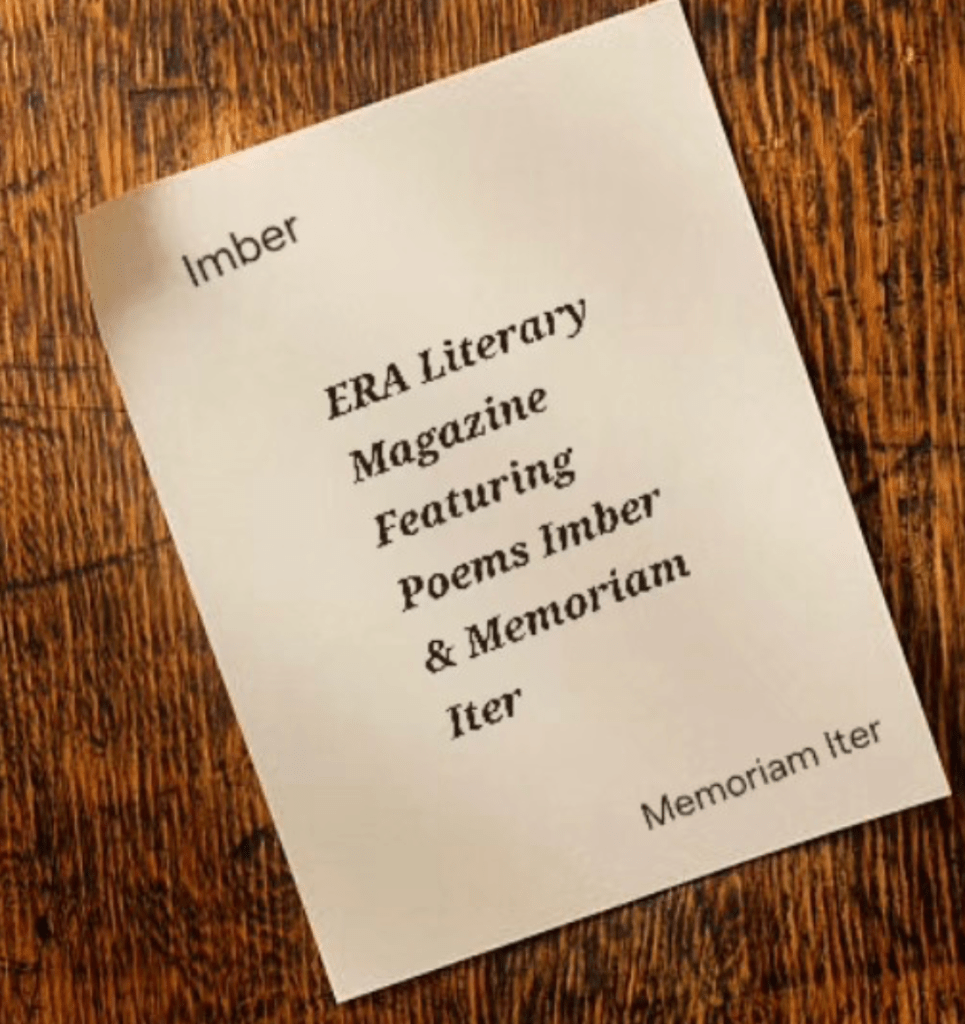
Ectorius has had poems published in Era Lit Magazine. You can read the poems here.

Helen: Which element of the writing process do you find most challenging and why?

Ectorius: I’d say editing, but having been an editor, now it’s more or less quite facilitated. If anything, telling the truth in writing. The way of being vulnerable and open, and honest to the point of feeling hurt by it. There’s a harshness in writing truthfully, and it requires you to be hurting, the kind of pain that you can’t just accept and walk away from. Had it not been for that, I don’t know what I’d do.

Helen: What is one of the most useful resources you use when writing?

Ectorius: I do not really utilize resources. I have a pen, a notebook, and a paper. That’s it. Everything else is purely writing, as it always has been.

Helen: What is the most useful piece of writing advice you’ve received, and by whom?

Etorius: “Write truthfully” by Judith Heneghan, my lecturer. And “Ordinary people and their opinions don’t matter. They’re nothing. Stories, stories are everything. Write them, because you’re one of the few that are born with it. You have a duty, and that duty is solely yours.” by a very close friend and author. These two are the most important parts for me. And I think they always will be.

Helen: Every writer experiences self-doubt. How do you overcome the fear and the little voice in your head to keep writing?

Ectorius: I spent at least twenty minutes to think about how to answer this. Truthfully? I don’t really have any doubts. I never really did. I wish I did, and I wish there were ways for me to say so, but I don’t. I write because I know what I am, and that alone makes me not need doubts. It never really did.

Helen: How do you fit your writing into your everyday life?

Ectorius: Everything I do is writing. My partner would tell you so, even my friends, even the people who truly know me. I could be conversing with someone, and in the end, I’m not even thinking about them or the conversation, but the dust on their jacket or the light of the window, a bird on a tree branch. I’m never there, even on the most important days, like a date. There have been times where my beloved has caught me just looking at buildings, windows, the sea, and anything else in-between. Sound comes and goes, and I remember what’s said, but I can’t quite say I’m ever really there. Every action, just like breathing, is writing. What I see, sense, feel, touch, eat, endure, or otherwise simply have any form of sensory contact with in any capacity, becomes writing.

Helen: Do you listen to music when you write, if so, what do you listen to and why?

Ectorius: I do, and I don’t. Some days I need silence, loneliness, and other days I need music. I listen to Kensuke Ushio, Ryuichi Sakamoto, Kenichiro Suehiro, Masaru Yokoyama, Ichiro Araki, Takeshi Obo, Konomi Suzuki, Kanzaki Iori, and Haruka Nakamura. There’s even a playlist called Orchestra Et Sum, a collection of every orchestra, instrumental or otherwise sentimental based pieces I’ve listened to and like and that are part of my inner life. It’s a 57 some hour playlist on Spotify haha. I listen to them because I need time alone, I need to be able to process what I feel, how, why. And I need… A space to be quietly vulnerable without anyone and anything around. Music and silence do that. Especially the artists and playlist I’ve mentioned.

Helen: How much research do you do for each book?

Ectorius: Hephaestion’s and Alexander’s story took me five years of research before writing, because they’re historical people. Generally, I will dedicate a lot of time to research if it’s realism. But if it’s not, not a lot. I just write what I remember and experience. 

Helen: From a writing perspective, are you a pantser or a planner? Do you write free form, or do you have a framework you stick to?

Ectorius: I already know the entire story just by the title alone. Titles, for me, are everything. They’re the se piece, the dressing room, the lighting and sound design. They’re every part of it. Most readers won’t really get it and they’ll sort of skip away from the title and into the nitty gritty of things, but I base everything around a feeling and a title. Especially because I already know how it will end. It’s like a surge, where an entire 500 some pages of a story come into your mind, bombarding you, trying to kill you if you don’t write it. I’m a hostage to my own work.

Helen: It sounds like you are typically quite prolific, but have you ever encountered writer’s block? Do you have any advice to overcome it?

Ectorius: I’ll be as frankly honest as I can here: I suffer. I harm myself with alcohol and isolation, and sometimes I don’t even do anything good for myself at all. Not being able to write is insanity for me. It kills me, slowly, until I’m at its mercy. It’s only been in the last two years that I’ve learned to deal with it differently. Finian usually sees when I’m struggling and ends up making us have a vacation or something else. I love her, because she knows what I need, and I don’t quite know how to explain that to anyone. It used to be worse; I used to spiral into the worst depths of darkness out there when I was far younger. Monica pulled me out of that, so did Ms. Catherine Lee. And James Johnston. There have been many times where not being able to write was a true danger to myself and nothing but an endless cycle of suffering. 

Helen: Do you have a burning desire to write in a different genre? If so, what would you write?

Ectorius: If I didn’t write in romance, I… I would probably write in something that has a close proximity to the stylistics of Film Noir.

Helen: What is the best thing that has happened to you since you began writing?

Ectorius: I became a published poet. I got to see the world, learn about its beauty and underlying parts. I got to love, be loved, and experienced hatred, wrath, and every other emotion out there. I guess what I’m trying to say is: I got to truly experience life in the most wonderful manner, so much so that I am never quite sure if I ever walked out of the dreamscape.

Helen: What is your favourite book and why do you like it so much?

Ectorius: Savannah Brown’s “Sweetdark” and “In Praise of Shadows” by Jun’Ichirō Tanizaki. Poetry for me is important; it’s the root of where I started, and you could say the same for Savannah Brown, too. It’s where she started as well. I never got to meet her and such, but I figure we’d both understand each other if we ever did. And In Praise of Shadows by Tanizaki would probably be something that taught me a lot about how to utilize silence, light, architecture. Especially how important this aesthetic really is. In the west, they don’t understand it. I’m Lithuanian by birth and even I cannot really lean toward western ideals anymore. It’s too barbaric, too rough.  And I guess my third favorite, or most liked book, not quite the word “favorite” for any of these… Would be “No Longer Human” by Osamu Dazai. It’s the most self-inflicted vulnerability out there, and if anything, the most raw example of writing truthfully no matter how badly it hurts.

Helen: I know authors are great readers. What are some of the books you read recently that you would recommend to others?

Ectorius: I… Would recommend philosophy. Especially Aristoteles’ work, Franz Kafka, or even the ancient greats and the philosophers of our time. Kant, too. Schopenhauer. I think discipline, philosophy, linguistics, the humanities, history, archeology, sociology, anthropology, the fine arts, literature, poetry. These are the most important foundations for anyone. I can’t recommend just “one” book so to speak. If anything, I would highly recommend discovering the world through philosophy and the classics, because I did, and I think everyone else should too.

Helen: We nearly at the end of the interview. Thank you for sharing your passion for writing. Is there anything anecdotal you’d like share.

Ectorius: When I first moved elsewhere, I got lost trying to understand the language. I asked five different people about how to say thank you and I’m sorry. An hour later, I discovered I didn’t really need it, because I was a stranger anyway.  So I asked a neighbour what to do, and she laughed and simply gave me food. That’s how I learned that it’s not about communication, but that kindness had been right there in front of me, and I was asking how to ask for it, instead of accepting what I had.

Helen: Thank you so much for joining me today. It has been really interesting chatting with you, and I wish you success with all your endeavours. Just to close us out, what advice would you give new writers?

Ectorius: Write what you want, in the end, once you’re 20 or 30, only really some classmates and strangers can judge you. Nobody else. Your story is yours, and so are your feelings, and nobody has the right to shame that. Now or later. If you’re born as a poet or an artist, you have a sole duty of carrying on the legacy of art; that is the only thing that will and should ever matter to you. Nothing and nobody else is above your destiny.

About the Author – Ectorius Angel

 Ectorius Angel is a Lithuanian poet and classical author whose work weaves themes of displacement, impermanence, and the unsaid moments that shape human experience. Raised across Europe and now residing in Norway and Hong Kong, he draws from influences spanning Eastern traditions to Western romanticism.

    His writing reflects a deep appreciation for minimalism, resonating with the balance of light and sound, often evoking nature’s shifting seasons. Through vivid imagery, Angel conjures tidal waves and gentle landscapes, using water and rain as metaphors for emotion and capturing beauty in fleeting moments. This connection to nature underlines his explorations of nostalgia, loss, and the sense of being a ghost—an observer in a distant world.

    Mentored by an Australian historical author, Angel’s literary journey centers on the complexities of human existence. He delves into the brokenness of heroes and the disillusionment that accompanies admiration, prompting readers to reflect on life’s fragility and intricate relationships.

    Inspired by luminaries like Osamu Dazai, Haruki Murakami, and Yukio Mishima, along with Western influences like F. Scott Fitzgerald and Oscar Wilde, Angel’s poetry transcends cultural boundaries. As an artist from marginalized post-USSR Lithuania, he channels cultural displacement into his work, viewing it as resistance against a world driven by greed and power.

    Despite the challenges of his fading cultural legacy, Angel’s writing stands as a testament to resilience. His lifelong search for “home” and reflections on grief are imbued with emotional depth, inviting readers to connect with the beauty and pain of existence. Ultimately, he is remembered as a poet who illuminates the complexities of life, crafting meaning from desolate places. 

Follow Ectorius on:

Instagram 

Goodreads

Purchase Shattered Reflections: A collection of poems featuring Ectroius Angel.

Amazon USA: Paperback

Amazon UK: Paperback

If you enjoy epic fantasy then check out my award winning Sentinal series, which is now complete. If you like fantasy books with a touch of romance then you will love my SoulMist series, start with SoulBreather. Prefer Dystopian Science Fantasy? Then try Harmony. Start the adventure and stay for the journey.

Sign up to my newsletter and download a free novella called Sentinals Stirring and get notified when my next books are published.

By clicking the sign up button above, you agree to share your email address with the site owner and the newsletter platform provider to receive marketing, updates, and other emails from the site owner. Use the unsubscribe link in those emails to opt out at any time.

By signing up to my newsletter, you agree to receive commercial information from Helen Garraway, located at 61 Bridge St, Kingston, Hertfordshire, UK (Data Administrator). You can withdraw your consent at any time. The data will be processed until the consent is withdrawn.
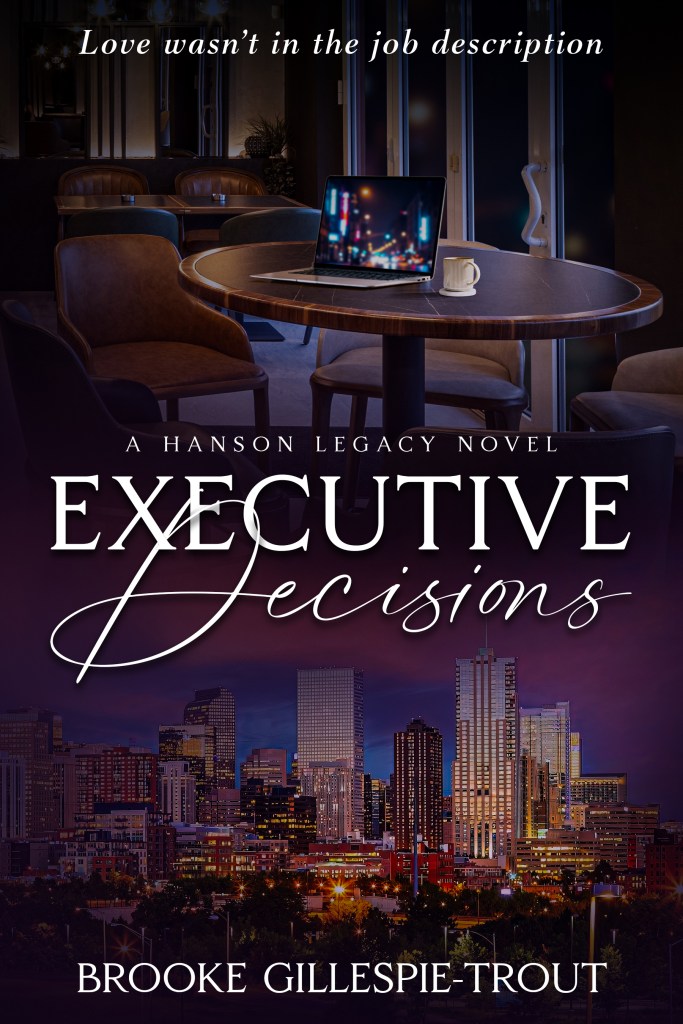
Author Interview – Debalina Halder

Literary fiction Author

It’s time to meet literary fiction author, Debalina Haldar, and find out more about her book: The Daughters of Shantiniketan, a tale of forbidden love and generational struggles that released in September 2025.

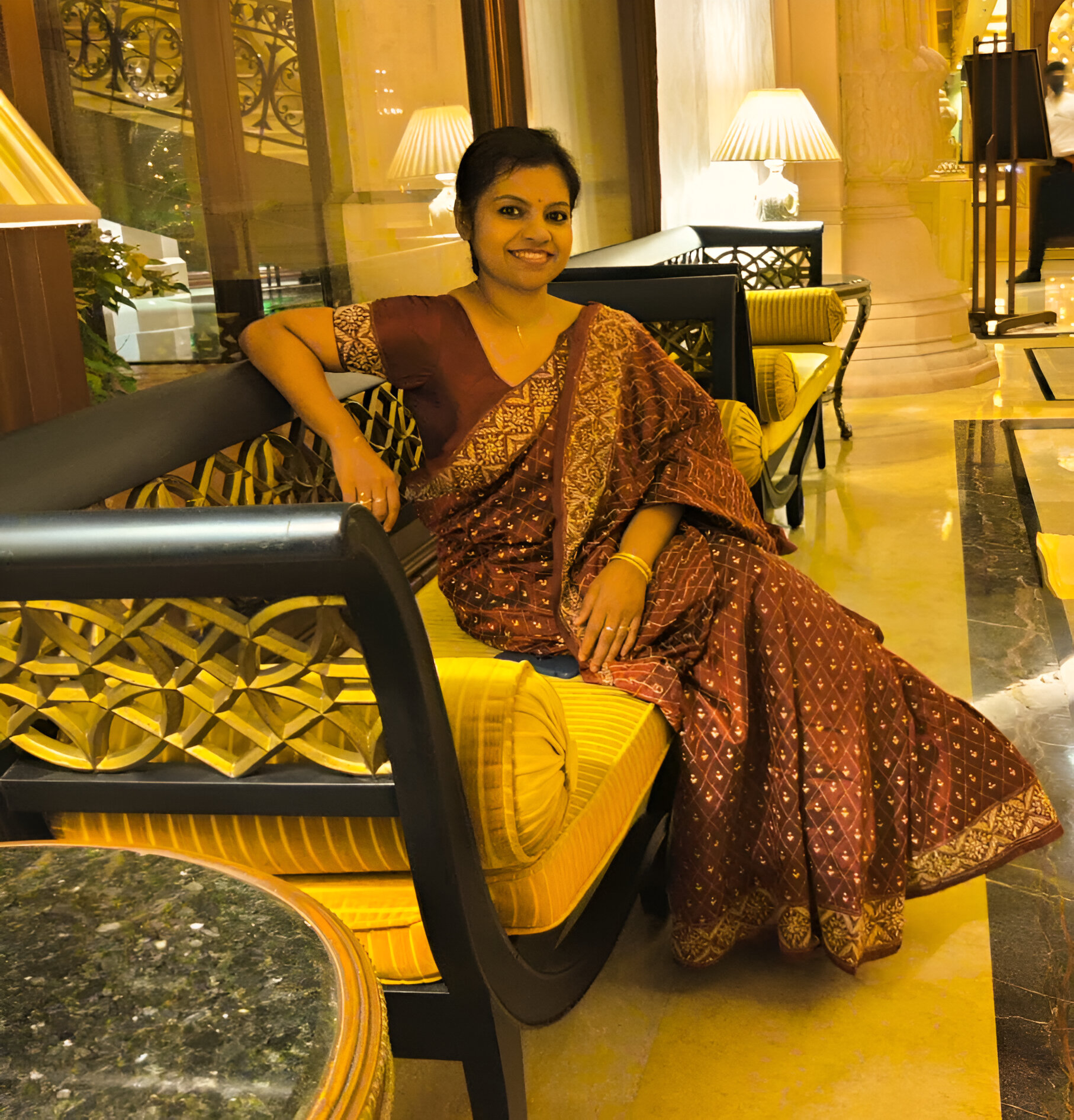
Helen: Welcome, Debalina. It’s a pleasure to meet you. Tell us about your latest book.

Debalina: The Daughters of Shantiniketan is a work of fiction and largely revolves around an aristocratic and orthodox Rabindranath Tagore-worshiping family in their ancestral mansion called Shantiniketan situated in the heart of Kolkata. Charulata, also called Charu, is the protagonist of this novel. She is the ideal progeny of the aristocratic family. The novel gradually reveals how her individual honesty and virtue, coupled with the hard-hitting questions about her beliefs raised by a carefree boy, enable her to rise above the pre-set notions that she has lived by all her life. The novel explores the troughs and crests of the sea of human emotions and as Charu sails through each of them, the readers discover how Tagore has weaved a song on every human emotion.

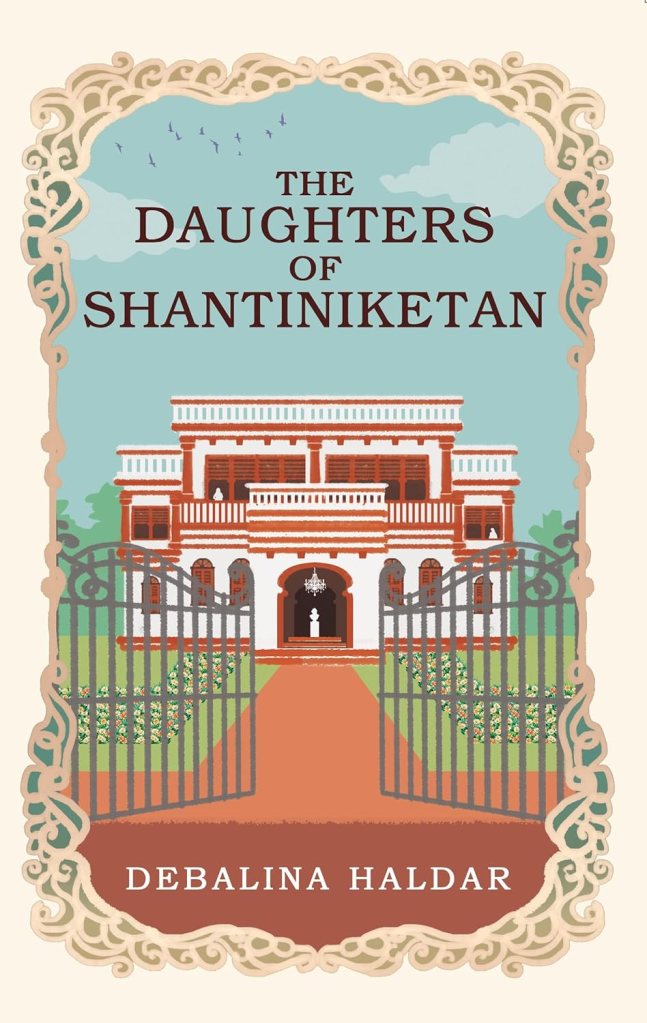
Helen: It sounds like an interesting tale set against the musical and literary backdrop of Tagore. Is there a story behind the cover?

Debalina: The cover shows the family mansion called Shantiniketan, which is also the name of the learning abode established by Rabindranath Tagore decades ago. It is symbolic of the extent of Tagore-worship. The family mansion, the very many Tagore portraits around the house, and of course the name – all of that is an outwardly attempt to show the world how the family has been a generational connoisseur of Tagore. However, the mansion fails at retaining the essence of being Shantiniketan, which translates to ‘abode of peace’. As we read the book, we find the mansion is anything but that… as the portraits on the walls witness the lies, secrets, conflicts, and silent tears.

Helen: There are always secrets hidden behind the walls! What made you write this particular book?

Debalina: Growing up in the 90s and early 2000s in Calcutta, we were beginning to witness a slow change in the kind of music that were being made. These new, free-spirited music was commonly called Jibonmukhi Gaan or Life-ward Music. I still remember, we had an essay topic for our exam in school – If we are now listening to life-ward music, were we listening to death-ward music for so long? And these so-called life-ward music compositions had begun to spread their reach to the songs by Tagore as well. In my impressionable young mind, this conflict had settled deeply and I’m happy to have liberated it so many years later. There exists an undeniable anxiety in the Bengali intelligentsia over the “purity” of Rabindrasangeet (songs written by Tagore) in the various renditions by artists. This gives them an entitlement to guard this “purity”. This tug of war between traditional and modern renditions of his music is explored in this novel.

Helen: An environment of many experiences certainly supports creativity. When did you realise you had a passion for writing?

Debalina: When I was a child, I grew up surrounded by books. Week by week, month by month, their numbers multiplied until they felt less like objects and more like companions. My father’s frequent job transfers meant I attended five different schools, but in all that moving, it was the books that stayed. They shielded me from the ache of losing friends to distance, from the fragility of belonging. By the time I was seven, I had already learned that love and loss are constants of life, and perhaps that was when writing began to draw me in.

Helen: I’m glad you had your books around you, and I can see why they would be important to you when you were constantly on the move. The Daughters of Shantiniketan was your third novel. Tell us what you are working on next.

Debalina:  I am wrapping up my next literary novel. While this work also has strong women characters who must support each other in adversity, it focuses on motherhood and its many forms.

Helen: Thank you so much for joining me today. Just to finish, with your books containing a lot of history, and references to real artists and their works, how much research do you do for each book?

Debalina: I spend a significant amount of time researching for my books. I explored contemporary musicians who reinterpret Tagore’s works as part of my research for the latest novel. It is refreshing to see musicians reimagining classical music written by Tagore (Rabindrasangeet) with a contemporary resonance, bridging the past and the present. They certainly gave me vivid ideas about Bolai’s free flowing songs in the novel. I also explored the complex relationship between Rabindrasangeet and the tradition of Carnatic music on one hand and local folk music on the other. How the usage of technology and modern instruments strengthens and sometimes weakens traditional compositions!

Around the time that I was writing this novel, I was also reading a lot about the women in Tagore’s life, some of whom might have influenced him to write songs. I read Jorasanko and The Daughters of Jorasanko by Aruna Chakravarty, Kadambari Debi’s Suicide Note by Ranjan Bandyopadhyay – amongst many others. I found women and their silent rebellions in these books – women from Tagore’s own family. How brave of these women to have stood against the looming patriarchy in every brick of the house and yet, create a place of their own! That moved me deeply.

About the Author – Debalina Haldar

Debalina Haldar writes in the literary fiction genre. Her novel, The Female Ward, was published in October 2012, by Thames River Press (UK). Her second book, Wrinkles in Memory, is a collection of 22 short stories. It was published in August 2016 by Lifi Publications. Wrinkles in Memory was shortlisted for the Sahitya Akademi Yuva Puraskar for books in English in 2020. Recently, in 2025, her third book, The Daughters of Shantiniketan, was published by Readomania Publishing.

Follow Debalina on Instagram

Purchase The Daughters of Shantiniketan from Amazon. (In KU at time of posting.)

UK: eBook
USA: eBook

As an Amazon Associate I may benefit from purchases made using these links.

If you enjoy epic fantasy then check out my award winning Sentinal series, which is now complete. If you like fantasy books with a touch of romance then you will love my SoulMist series, start with SoulBreather. Prefer Dystopian Science Fantasy? Then try Harmony. Start the adventure and stay for the journey.

Sign up to my newsletter and download a free novella called Sentinals Stirring and get notified when my next books are published.

By clicking the sign up button above, you agree to share your email address with the site owner and the newsletter platform provider to receive marketing, updates, and other emails from the site owner. Use the unsubscribe link in those emails to opt out at any time.

By signing up to my newsletter, you agree to receive commercial information from Helen Garraway, located at 61 Bridge St, Kingston, Hertfordshire, UK (Data Administrator). You can withdraw your consent at any time. The data will be processed until the consent is withdrawn.
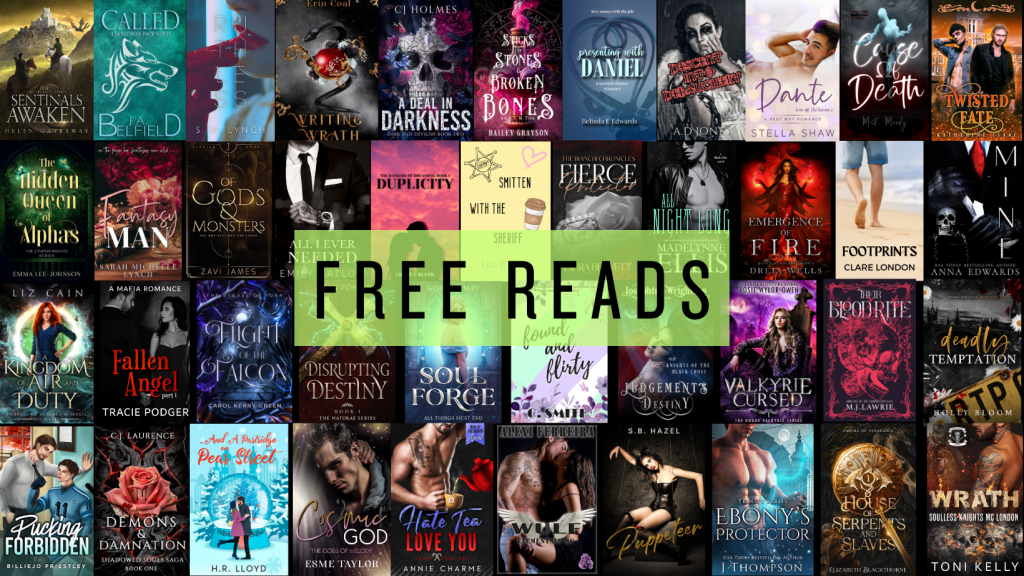
Authors At The Armouries (AATA) Stuff Your Kindle Day – 19th July 2025.

Check out the books from some of the authors attending the 2025 Authors At The Armouries book fair and gothic ball.

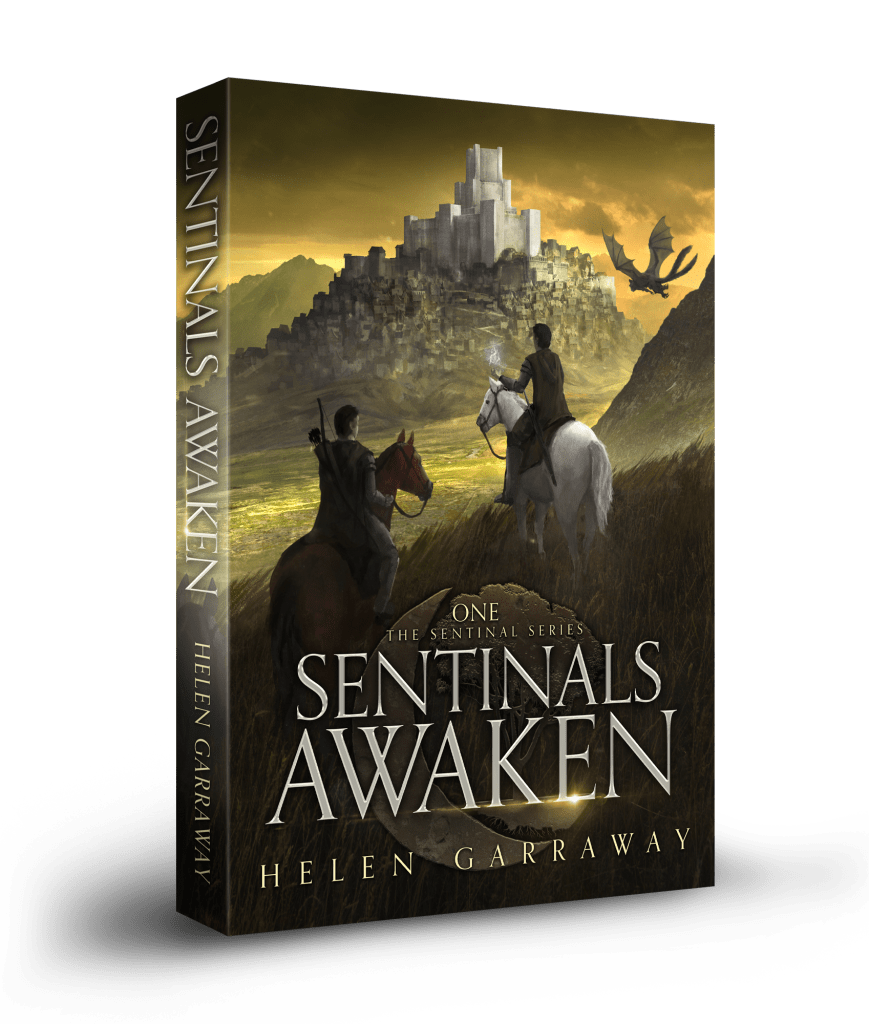
Lots of free or 99p books – Including Sentinals Awaken (FREE)! Check them out now. There are books in a wide range of genres, so you’re sure to find something you like!

UK mainly, though mine is free on Amazon US as well. Offer on many of the books is for July 19th 2025 only, so don’t wait.

Check out the book promo today!

If you haven’t started the epic fantasy Sentinal series yet, then there is no better time because the first book, Sentinals Awaken is FREE on Amazon UK and USA. Read it on Kindle Unlimited but don’t own the book? Download it today!

Click HERE to Download Your Copy Today!

Book One of the Epic Fantasy Sentinal series

Book Description

When a long-forgotten threat starts to reemerge, one man stands as the last defense against darkness…

Jerrol Haven serves his king without question. When he finds evidence of corruption and is attacked, the loyal soldier’s mind spins after his touch of a sacred tree awakens the dormant spirit of a three-thousand-year-old protector. But he fears he has failed after the crown prince accuses him of treason and orders his execution…

Fleeing the city, Jerrol is stunned when the goddess appears to him, appoints him captain of her warriors, and charges him with a quest to find artifacts that can save the realm. And as he runs into danger and more betrayals, the steadfast hero discovers a rare gift that may be the world’s only hope…

Can Jerrol rally the forces of good to stop a rising evil?

Sentinals Awaken is the first book in the Sentinal epic fantasy series. If you like endearing characters, immersive world-building, and gritty conflict, then you’ll love Helen Garraway’s award-winning tale.

Buy Sentinals Awaken to restore the guardians today!

Complete series is on Kindle Unlimited. First four books on Audio:

Book 0.5: Sentinals Stirring (prequel novella) Ebook free if you sign up to my newsletter.
Book One: Sentinals Awaken
Book Two: Sentinals Rising
Book Three: Sentinals Justice
Book 3.5: Sentinals Recovery (Novella)
Book Four: Sentinals Across Time
Book Five: Sentinals Banished
Book Six: Sentinals Destiny
Prequel: Sentinals Origins Part One
Prequel: Sentinals Origins Part Two (Release Date TBC)

Short Stories (For Newsletter subscribers only)
Sentinals Discovery (First few chapters of Sentinals Awaken from Birlerion’s POV.)
Book 2.5: Sentinals and Guardians 2023 xmas bonus story.

If you enjoy fantasy books then you will love my epic fantasy Sentinal series or the Romantic Fantasy SoulMist series. Sign up to my newsletter and download a free novella called Sentinals Stirring and also Sentinals Discovery, the first few chapters of Sentinals Awaken from Birlerion’s POV and get notified when my next books are published.

By clicking the sign up button above, you agree to share your email address with the site owner and the newsletter platform provider to receive marketing, updates, and other emails from the site owner. Use the unsubscribe link in those emails to opt out at any time.

By signing up to my newsletter, you agree to receive commercial information from Helen Garraway, located at 61 Bridge St, Kingston, Hertfordshire, UK (Data Administrator)
.

Book Review Alert: Sunflowers in the Snow by Dawn Bonanno

Reviewed: June 2nd, 2025
Released: August 26th, 2024
Genre: Fantasy Short Stories


Do you believe in magic?

Can you imagine how it might exist all around us in everyday life? Perhaps hidden in trees and sunflowers, slipping into view when needed, and leaving gifts when all hope has abandoned us. Why does a young woman caring for her elderly grandfather find a secret sunflower patch in the snowy hills of Wisconsin? What happens when a demon woken from sleep happens upon a grieving cat dad? How will a sentient house end its long loneliness? Can the smallest water fairy find her missing sister? What does a bride even do with an enchanted wedding veil? Who will save a city cat from a haunted country bridge?

A collection of fourteen fantasy stories about magic in the real world, Sunflowers in the Snow explores friendship and family bonds through sentient houses, magical taverns, secret gardens, and people from other realms who are more like us than we could ever dream. Featured stories include: Sunflowers in the Snow, Cara’s Heartsong, Voices Heard Within Heartbreak House, Never Say Never, The Legacy of Kalila Arquette, Sarah’s Little Monster Hunter, and more. Read My Thoughts…

Author Interview – Patrick Weill

Author of the Park and Walker Action Thriller series.

I am very pleased to welcome Patrick Weill to my blog to talk about his book Double Threat.

Helen: Welcome Patrick. I’m excited to talk to you about Double Threat

Patrick: My latest book is entitled Double Threat. It is the third book in what will either be a completed trilogy or an expanded action thriller series. Set in sunny San Diego, California, and also on the Pacific Ocean, this novel features police detectives Tony Park and Jeff Walker, who split up for the first time as they star in alternating chapters until their stories intertwine in a twist that readers won’t see coming.

Park drives up to Los Angeles, where he joins forces with the FBI, working undercover on a cruise ship in pursuit of an unidentified serial killer. Walker becomes a member of MARTAC, the Harbor Police’s SWAT team, and in this capacity tackles a case of his own involving political assassination, white supremacy, and narcotics trafficking, facing powerful enemies both old and new.

Helen: Sounds like quite the adventure. How did you choose the cover design?

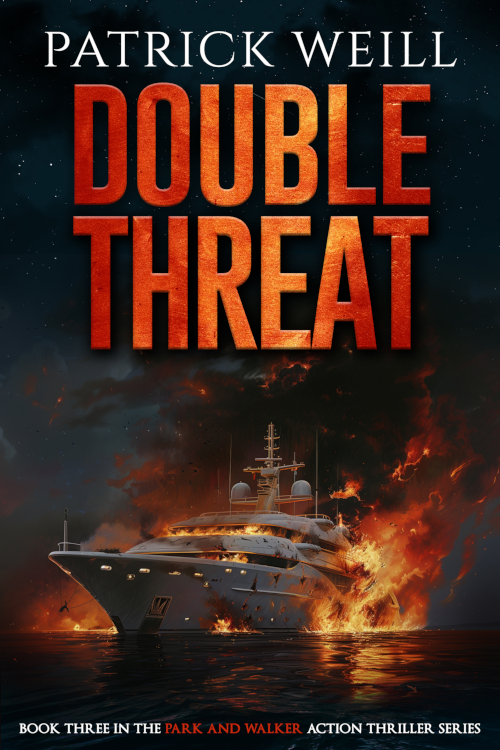
Patrick: The cover is from a scene that takes place late in the book, when a bomb surgically placed inside a bad guy’s abdominal cavity explodes aboard a crooked politician’s superyacht. But the image is also intended to evoke a general sense of danger aboard a massive ship on the ocean because much of the action is set on a cruise ship, giving new meaning to the term ‘rough seas’!

Helen: It is a powerful image. Why did you call your book Double Threat? Is there a special meaning or back story about the title?

Patrick: Yes, there IS a special meaning to Double Threat. Who will be the real double threat? Detectives Park and Walker, who are up against long odds as usual? Or the twin forces of evil they are facing, which turn out to be connected. ‘Double’ also refers to the book being two stories in one.

Helen: I love the insights behind your title. Who inspired you to start writing?  

Patrick: Lee Child and my grandmother. Child because he found himself out of work/in need of money and, having been a reader all his life, picked up a pencil and a legal pad and set to work. Just like me. My grandmother because when I was twelve years old, she encouraged me to write a book review in a local newspaper and helped me publish it.

Helen: With the third book of your series complete, what are you working on next?

Patrick: I am currently writing a different kind of novel, a legal thriller featuring both male and female protagonists. It’s a major challenge, but I am doing heaps of research, and, with three action thrillers under my belt, I feel ready for it.

Helen: It’s always exciting to venture into a different area for your next book. Wishing you plenty of writing inspiration. Let’s talk a little about your writing process. When writing, do you listen to music or do you prefer silence?

Patrick: I used to, but now I find that I focus better with earplugs instead. I am able to devote all of my attention to writing instead of splitting it between cognitive tasks.

Helen: Are you a pantser or a planner? Do you write free form, or do you have a framework you stick to?

Patrick: Both. Writing is an art as well as a science; a hospital can’t be built without a blueprint, yet inspiration only comes through the imagination, which must be allowed to freely flow.

Helen: That is so true! Earlier you mentioned you’ve been doing research for your new book. How much research do you do for each book?

Patrick: Plenty. For example, in the case of the legal thriller, I will have read at least seven books, two of which were non-fiction and quite dry (but informative). And I’ll have spent hours and hours reading on the internet. Possibly contacting legal and/or law enforcement professionals, etc.

Helen: Thank you for joining me today. Just to finish, what is the most useful piece of writing advice you’ve received, and by whom?

Patrick: ‘Truckers don’t get trucker’s block, nor nurses nurse’s block.’

-Lee Child

About the Author

Patrick Weill

Patrick Weill is an award-winning translator and author who resides in central Mexico with his family along with four dogs and an aquarium full of fish. You can visit his website to download a FREE Park and Walker short story!

Purchase Patrick’s book, Double Threat

Link to book on Amazon UK: eBook | Paperback

Link to book on Amazon US: eBook | Paperback

As an Amazon Associate I may benefit from purchases made using these links.

If you enjoy epic fantasy then check out my award winning Sentinal series, which is now complete. If you like fantasy books with a touch of romance then you will love my SoulMist series, start with SoulBreather. Prefer Dystopian Science Fantasy? Then try Harmony. Start the adventure and stay for the journey.

Sign up to my newsletter and download a free novella called Sentinals Stirring and get notified when my next books are published.

By clicking the sign up button above, you agree to share your email address with the site owner and the newsletter platform provider to receive marketing, updates, and other emails from the site owner. Use the unsubscribe link in those emails to opt out at any time.

By signing up to my newsletter, you agree to receive commercial information from Helen Garraway, located at 61 Bridge St, Kingston, Hertfordshire, UK (Data Administrator). You can withdraw your consent at any time. The data will be processed until the consent is withdrawn.
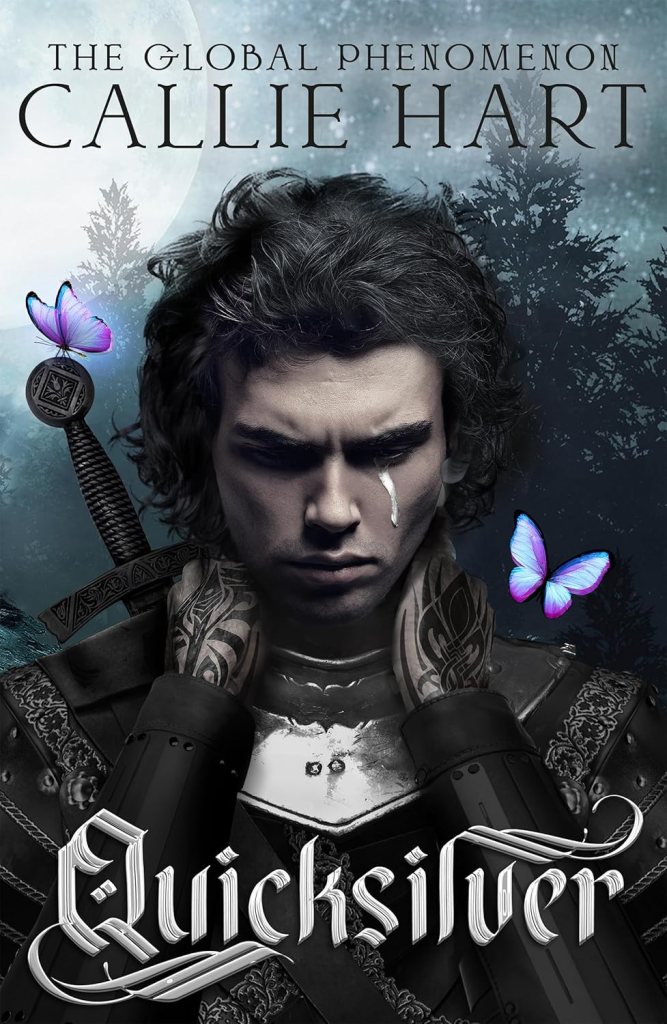
Book Review Alert: Quicksilver by Callie Hart

Reviewed: October 10th, 2024
Released: September 10th, 2024
Genre: Fantasy Romance


Do not touch the sword. Do not turn the key. Do not open the gate.

In the land of the unforgiving desert, there isn’t much a girl wouldn’t do for a glass of water.

Twenty-four-year-old Saeris Fane is good at keeping secrets. No one knows about the strange powers she possesses, or the fact that she has been picking pockets and stealing from the Undying Queen’s reservoirs for as long as she can remember.

But a secret is like a knot. Sooner or later, it is bound to come undone.

When Saeris comes face-to-face with Death himself, she inadvertently re-opens a gateway between realms and is transported to a land of ice and snow. The Fae have always been the stuff of myth, of legend, of nightmares… but it turns out they’re real, and Saeris has landed herself in the middle of a centuries-long conflict that might just get her killed.

The first of her kind to tread the frozen mountains of Yvelia in over a thousand years, Saeris mistakenly binds herself to Kingfisher, a handsome Fae warrior, who has secrets and nefarious agendas of his own. He will use her Alchemist’s magic to protect his people, no matter what it costs him . . . or her.

Death has a name. It is Kingfisher of the Ajun Gate. His past is murky. His attitude stinks. And he’s the only way Saeris is going to make it home. Read My Thoughts…

Book Review Alert: May Day by Josie Jaffrey

Reviewed: September 23rd, 2024
Released: July 9th, 2020
Genre: Paranormal Fantasy


If the murderer you’re tracking is a vampire, then you want a vampire detective. Just maybe not this one. It’s not that Jack Valentine is bad at her job. The youngest member of Oxford’s Seekers has an impressive track record, but she also has an impressive grudge against the local baron, Killian Drake.

When a human turns up dead on May Morning, she’s determined to pin the murder on Drake. The problem is that none of the evidence points to him. Instead, it leads Jack into a web of conspiracy involving the most powerful people in the country, people to whom Jack has no access. But she knows someone who does.

To get to the truth, Jack will have to partner up with her worst enemy. As long as she can keep her cool, Drake will point her to the ringleaders, she’ll find the murderer and no one else will have to die.
Body bags on standby.

May Day is the first book in Josie Jaffrey’s Seekers series, an urban fantasy series set in Oxford, England. Read My Thoughts…

Book Review Alert: Shards of Hope by BL Jones

Reviewed: September 22nd, 2024
Released: January 19th, 2023
Genre: Superhero Fantasy


Hope can be a prism of scars from which light shines.

Twenty years ago, an infamous scientist created Liquid Onyx, a world-changing chemical which led to the rise of superheroes and supervillains.

Jack Roth is not a superhero. He’s an assassin, a killer, a lethal weapon forged and controlled by the evil organisation Obsidian Inc.

Leo Snow isn’t a superhero either. He’s a British secret agent who spends his life protecting the world and saving everyone he can.

When these two men’s lives collide on the streets of Danger City just as Obsidian Inc is gearing up for another cataclysmic scientific discovery, they’ll both need to reckon with their dark past, messy present and potentially hopeful future. Read My Thoughts…