Author and Poet
It’s time to meet Author and poet, Ectorius Angel, and find out more his writing journey.
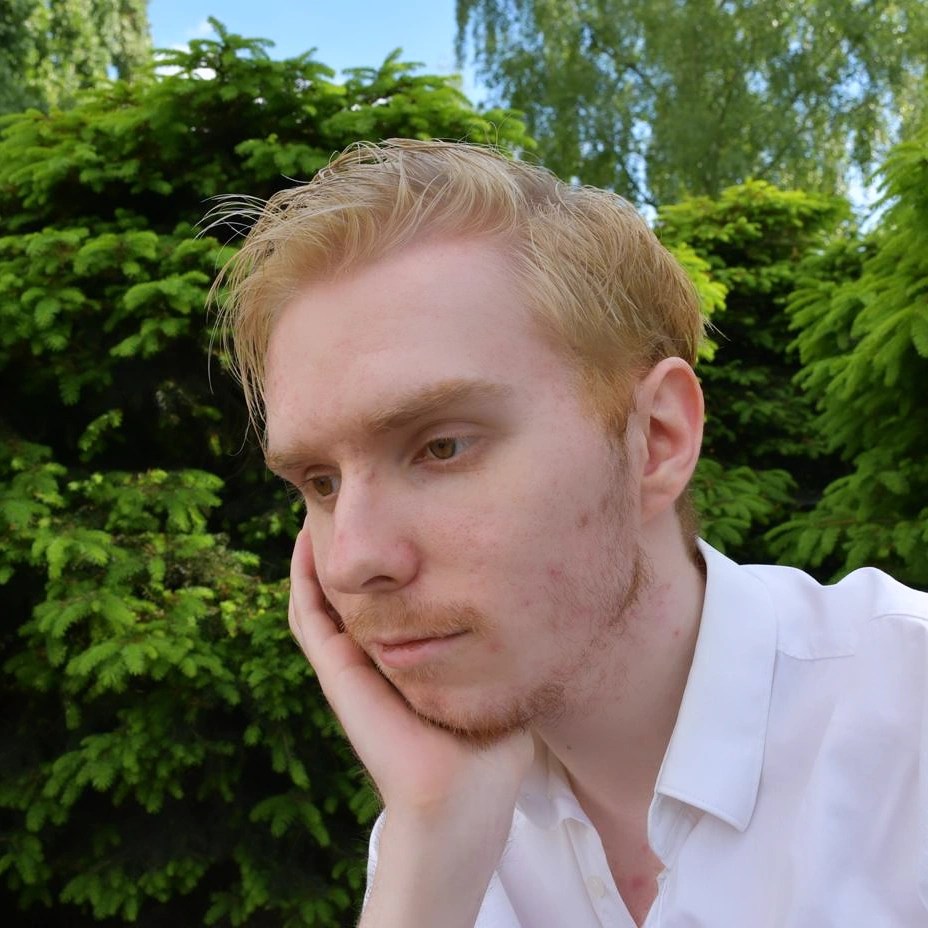
Helen: Welcome, Ectorius. It’s a pleasure to meet you. Tell us about your work.
Ectorius: People keep asking me about a book. I have tried so hard to be honest and say that I do have one, and I do, but it’s one that can’t be published any time soon, in the hands of a lovely publisher called Curious Corvid Publishing. It’s called The Flowers of Hades, and it’s perhaps the roughest, but somewhat also more original works I’ve ever written. I wish I could tell you more about it, let you know what else there is to say, but right now, all I can really say is that it will come when it is time. I wish I could say a lot more about it and my second book, called Remember We Once Lived. A story about Alexander the Great and Hephaestion. That is the most heartfelt, poetic, and truly hardest work I’ve ever written in my entire life. I have cemented over five years of research and archeology, academic research and historical research just to have the general knowledge and understanding of Hephaestion’s and Alexander’s inner lives. These are in the hands of Ravven White of Curious Corvid Publishing right now. However, more than anything, I’m a poet, and I guess, in some way, instead of a current book, I’d of loved to say that I have many poems coming, because there have been quite a lot that has been sent in to poetry journals, magazines, art centers, and so much more. That is my biggest pride to announce, more than any other book. I come from poetry, and poetry is what made me.
Helen: Congratulations on your forthcoming publications, and I bet the waiting for your books to come out is excrutiating. Have you had sight of the covers yet?
Ectorius: I’m sad I can’t really say much here. Covers are something I believe come at the end, once the book has been made ready for publishing. Right now, I don’t really know what it would be like, or what its design will look like just on principle. We have great designers in Curios Corvid, and many others in other publishers and whatnot. So, hopefully, it will be beautiful, and I think simplistic, because that’s what I would like to be.
Helen: How did you come up with the title for your book?
Ectorius: The Flowers of Hades wasn’t its original name. In reality, it was very far from that name. There are characters based off of a lot of other people, but two female characters are based majorly around the bad and the good parts of my partner, Finian, who has been by my side for years. Originally, it was named something entirely different. It had…Four titles, before settling on that. Titles are…They are the body of my work. I know how stories will end, I know how tragedy will come and what I need to suffer through to write it. I never plan, I hate planning, I find it absurd and it makes no sense in any capacity. You write to feel something; you write because you feel.
Helen: I think everyone has a different way of writing and as long as you continue to love what you do, and you enjoy writing then that is what works for you. What made you write this particular book?
Ectorius: I want you to imagine walking into a bedroom; it belongs to someone you once loved, or knew, or someone you hated. But it still belongs, regardless, to someone. There are books there, clothes, items, things you don’t know much about. It’s the inner life of someone else. Someone you’ll never get to see, and however you feel, never get to resolve anything with. How you feel is up to you, and it’s for nobody to shame. And you stand there, looking, alone, not a word to your mouth, a smile to your face. Just a torn, empty self that can only be ready to get rid of everything to never feel it again. A hatred or a desire to get rid of something so strong. It’s how ordinary people or ordinary writers will never understand why I prefer solitude, why love doesn’t kill loneliness, or the suffocation I feel every day when someone mentions the name of a person I know, or when they tell me “Why can’t you do something so simple?” When my mind is constantly busy, and I easily lose track of things. I’m never there, even in the most important moments; I’m always unreachable. I guess that’s why I wrote the book, why I write anything at all. I can’t live without writing, and I can’t write without suffering living. Every day is a constant wish for an eternal rest without the call of writing in a modern age, but I know that if I stop even once, I’ll want to kill myself here and now, and that is the worst and best thing I have ever been able to say about why I write anything.
Helen: Creating a work of art can be consuming. As always, balance is important. Life feeds creativity and creativity feeds life. If you don’t experience one, how can the other exist? When did you first realise you had such a passion for writing?
Ectorius: I never really realized it. I was too young to really understand. I knew that some days I’d walk outside in Italy or Germany and I’d just stop. There’d be a bird, or a hawk or a butterfly or even just the light off of the edge of a ledge of another building. The sunlight, the grass, a sway of blades that feels like a caress. I guess to answer the “When” of it, it’d be earlier than I can really remember. So early it just came to me, and by nine, I had a mentor who was a published author of whom I studied under.
Helen: On your writing journey was there anyone who gave you the inspiration to write?
Ectorius: That’d be my mentor, Jules, and my friends. Ana Monica Banto, Dr. Catherine Sooyun Lee, Iselin Lørentsen, Stefani Stamboliyska-Murffit, Joshua Sell, and James Johnston and Patrick Walsh, now known as Vox Forged as a voice actor. Without them, I wouldn’t really be here. But more than anyone else, it is also Finian Sun, my partner, to whom I owe everything, now and any time in the future.
Helen: I know you write poetry, but for fiction, which genre do you typically write?
Ectorius: Romance, historical romance, romantic poetry, travel poetry and in general just contemporary romance. Much of it is to do with the fragility of life. How a shadow falls on a wall and we look at it, quietly, unmoving. How the touch of a hand says you are safe. Or even how an old motorbike leaning against a wall can be the last drop of a memory that you never want to let go of. Human sensuality, gentleness, fragility, the seconds of quietness between moments. And especially the fractured parts that show our most vulnerable selves.
Helen: Who is your protagonist and why did you write her/him?
Ectorius: He is David, a boy who isn’t quite understood by others, or by those around him. He’s an outsider, a travelling nomad, someone who can’t quite be the thing everyone wants. Having lost a lot, seen more funerals than I can really count on two hands at the age of twenty-seven, it… It makes you look on a lot. On those you’ve lost, the people you’ve remembered, the smiles, everything else. That led to this. Writing about seeing the world from a writer’s perspective, but hurtful, emotional, raw. So raw that even my own lecturer had to email me and ask me if I was alright haha.
Helen: If your Main Character could answer, why would they say we should read your book?
Ectorius: I think the main character wouldn’t want anyone to read his book. It’s a diary entry of every day life, of existing. One could even say it’s the deepest and most vulnerable emotions out there, and that alone would make him scared of anyone ever really reading it.
Helen: How do you get the ideas for a new book?
Ectorius: Some days I will look at something and eventually that little something turns into more. The flicker of a light at a traffic stops during the rain in Tokyo, or the calm walk through Roma as you see tourists and the shadows that linger just a little over the ancient ruins. There’s a story in everything, every part of life, and in some manner, it just comes by itself. I believe the stories that need to be written, come to their own designated writer, their own storyteller. A small spark of a flame that gently carries its heat onward until it reaches the wandering one.
Helen: Are you working on anything new? Could you tell us about your current WIP.
Ectorius: I am currently working on publishing three poetry collections when and if I can, and a non-fiction work that I’ve started with my undergraduate. It was originally written as a study paper of sorts for writing purposes. Now it’s a more truthful and vulnerable piece. An exploration of a person’s inner life, the dreamscape of it all, the bond between reality and surrealism. It’s a work very much like Murakami’s.
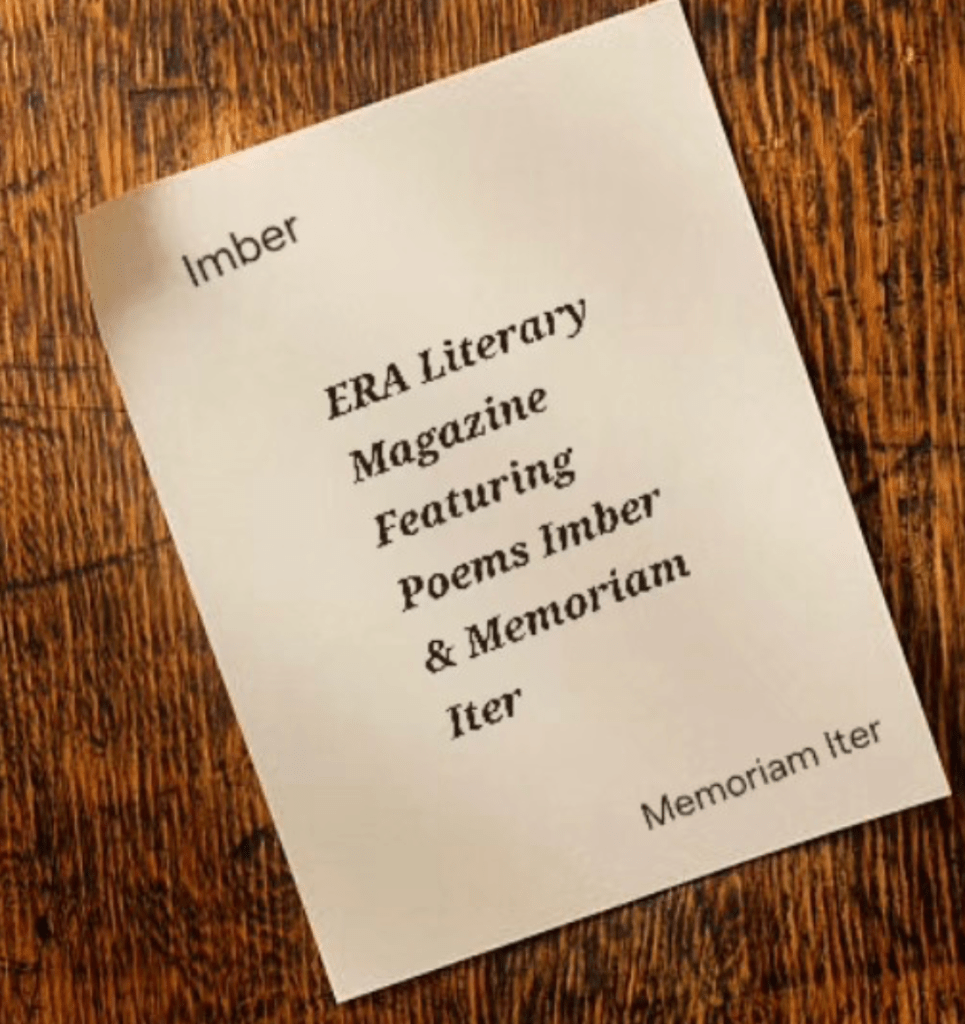
Ectorius has had poems published in Era Lit Magazine. You can read the poems here.
Helen: Which element of the writing process do you find most challenging and why?
Ectorius: I’d say editing, but having been an editor, now it’s more or less quite facilitated. If anything, telling the truth in writing. The way of being vulnerable and open, and honest to the point of feeling hurt by it. There’s a harshness in writing truthfully, and it requires you to be hurting, the kind of pain that you can’t just accept and walk away from. Had it not been for that, I don’t know what I’d do.
Helen: What is one of the most useful resources you use when writing?
Ectorius: I do not really utilize resources. I have a pen, a notebook, and a paper. That’s it. Everything else is purely writing, as it always has been.
Helen: What is the most useful piece of writing advice you’ve received, and by whom?
Etorius: “Write truthfully” by Judith Heneghan, my lecturer. And “Ordinary people and their opinions don’t matter. They’re nothing. Stories, stories are everything. Write them, because you’re one of the few that are born with it. You have a duty, and that duty is solely yours.” by a very close friend and author. These two are the most important parts for me. And I think they always will be.
Helen: Every writer experiences self-doubt. How do you overcome the fear and the little voice in your head to keep writing?
Ectorius: I spent at least twenty minutes to think about how to answer this. Truthfully? I don’t really have any doubts. I never really did. I wish I did, and I wish there were ways for me to say so, but I don’t. I write because I know what I am, and that alone makes me not need doubts. It never really did.
Helen: How do you fit your writing into your everyday life?
Ectorius: Everything I do is writing. My partner would tell you so, even my friends, even the people who truly know me. I could be conversing with someone, and in the end, I’m not even thinking about them or the conversation, but the dust on their jacket or the light of the window, a bird on a tree branch. I’m never there, even on the most important days, like a date. There have been times where my beloved has caught me just looking at buildings, windows, the sea, and anything else in-between. Sound comes and goes, and I remember what’s said, but I can’t quite say I’m ever really there. Every action, just like breathing, is writing. What I see, sense, feel, touch, eat, endure, or otherwise simply have any form of sensory contact with in any capacity, becomes writing.
Helen: Do you listen to music when you write, if so, what do you listen to and why?
Ectorius: I do, and I don’t. Some days I need silence, loneliness, and other days I need music. I listen to Kensuke Ushio, Ryuichi Sakamoto, Kenichiro Suehiro, Masaru Yokoyama, Ichiro Araki, Takeshi Obo, Konomi Suzuki, Kanzaki Iori, and Haruka Nakamura. There’s even a playlist called Orchestra Et Sum, a collection of every orchestra, instrumental or otherwise sentimental based pieces I’ve listened to and like and that are part of my inner life. It’s a 57 some hour playlist on Spotify haha. I listen to them because I need time alone, I need to be able to process what I feel, how, why. And I need… A space to be quietly vulnerable without anyone and anything around. Music and silence do that. Especially the artists and playlist I’ve mentioned.
Helen: How much research do you do for each book?
Ectorius: Hephaestion’s and Alexander’s story took me five years of research before writing, because they’re historical people. Generally, I will dedicate a lot of time to research if it’s realism. But if it’s not, not a lot. I just write what I remember and experience.
Helen: From a writing perspective, are you a pantser or a planner? Do you write free form, or do you have a framework you stick to?
Ectorius: I already know the entire story just by the title alone. Titles, for me, are everything. They’re the se piece, the dressing room, the lighting and sound design. They’re every part of it. Most readers won’t really get it and they’ll sort of skip away from the title and into the nitty gritty of things, but I base everything around a feeling and a title. Especially because I already know how it will end. It’s like a surge, where an entire 500 some pages of a story come into your mind, bombarding you, trying to kill you if you don’t write it. I’m a hostage to my own work.
Helen: It sounds like you are typically quite prolific, but have you ever encountered writer’s block? Do you have any advice to overcome it?
Ectorius: I’ll be as frankly honest as I can here: I suffer. I harm myself with alcohol and isolation, and sometimes I don’t even do anything good for myself at all. Not being able to write is insanity for me. It kills me, slowly, until I’m at its mercy. It’s only been in the last two years that I’ve learned to deal with it differently. Finian usually sees when I’m struggling and ends up making us have a vacation or something else. I love her, because she knows what I need, and I don’t quite know how to explain that to anyone. It used to be worse; I used to spiral into the worst depths of darkness out there when I was far younger. Monica pulled me out of that, so did Ms. Catherine Lee. And James Johnston. There have been many times where not being able to write was a true danger to myself and nothing but an endless cycle of suffering.
Helen: Do you have a burning desire to write in a different genre? If so, what would you write?
Ectorius: If I didn’t write in romance, I… I would probably write in something that has a close proximity to the stylistics of Film Noir.
Helen: What is the best thing that has happened to you since you began writing?
Ectorius: I became a published poet. I got to see the world, learn about its beauty and underlying parts. I got to love, be loved, and experienced hatred, wrath, and every other emotion out there. I guess what I’m trying to say is: I got to truly experience life in the most wonderful manner, so much so that I am never quite sure if I ever walked out of the dreamscape.
Helen: What is your favourite book and why do you like it so much?
Ectorius: Savannah Brown’s “Sweetdark” and “In Praise of Shadows” by Jun’Ichirō Tanizaki. Poetry for me is important; it’s the root of where I started, and you could say the same for Savannah Brown, too. It’s where she started as well. I never got to meet her and such, but I figure we’d both understand each other if we ever did. And In Praise of Shadows by Tanizaki would probably be something that taught me a lot about how to utilize silence, light, architecture. Especially how important this aesthetic really is. In the west, they don’t understand it. I’m Lithuanian by birth and even I cannot really lean toward western ideals anymore. It’s too barbaric, too rough. And I guess my third favorite, or most liked book, not quite the word “favorite” for any of these… Would be “No Longer Human” by Osamu Dazai. It’s the most self-inflicted vulnerability out there, and if anything, the most raw example of writing truthfully no matter how badly it hurts.
Helen: I know authors are great readers. What are some of the books you read recently that you would recommend to others?
Ectorius: I… Would recommend philosophy. Especially Aristoteles’ work, Franz Kafka, or even the ancient greats and the philosophers of our time. Kant, too. Schopenhauer. I think discipline, philosophy, linguistics, the humanities, history, archeology, sociology, anthropology, the fine arts, literature, poetry. These are the most important foundations for anyone. I can’t recommend just “one” book so to speak. If anything, I would highly recommend discovering the world through philosophy and the classics, because I did, and I think everyone else should too.
Helen: We nearly at the end of the interview. Thank you for sharing your passion for writing. Is there anything anecdotal you’d like share.
Ectorius: When I first moved elsewhere, I got lost trying to understand the language. I asked five different people about how to say thank you and I’m sorry. An hour later, I discovered I didn’t really need it, because I was a stranger anyway. So I asked a neighbour what to do, and she laughed and simply gave me food. That’s how I learned that it’s not about communication, but that kindness had been right there in front of me, and I was asking how to ask for it, instead of accepting what I had.
Helen: Thank you so much for joining me today. It has been really interesting chatting with you, and I wish you success with all your endeavours. Just to close us out, what advice would you give new writers?
Ectorius: Write what you want, in the end, once you’re 20 or 30, only really some classmates and strangers can judge you. Nobody else. Your story is yours, and so are your feelings, and nobody has the right to shame that. Now or later. If you’re born as a poet or an artist, you have a sole duty of carrying on the legacy of art; that is the only thing that will and should ever matter to you. Nothing and nobody else is above your destiny.
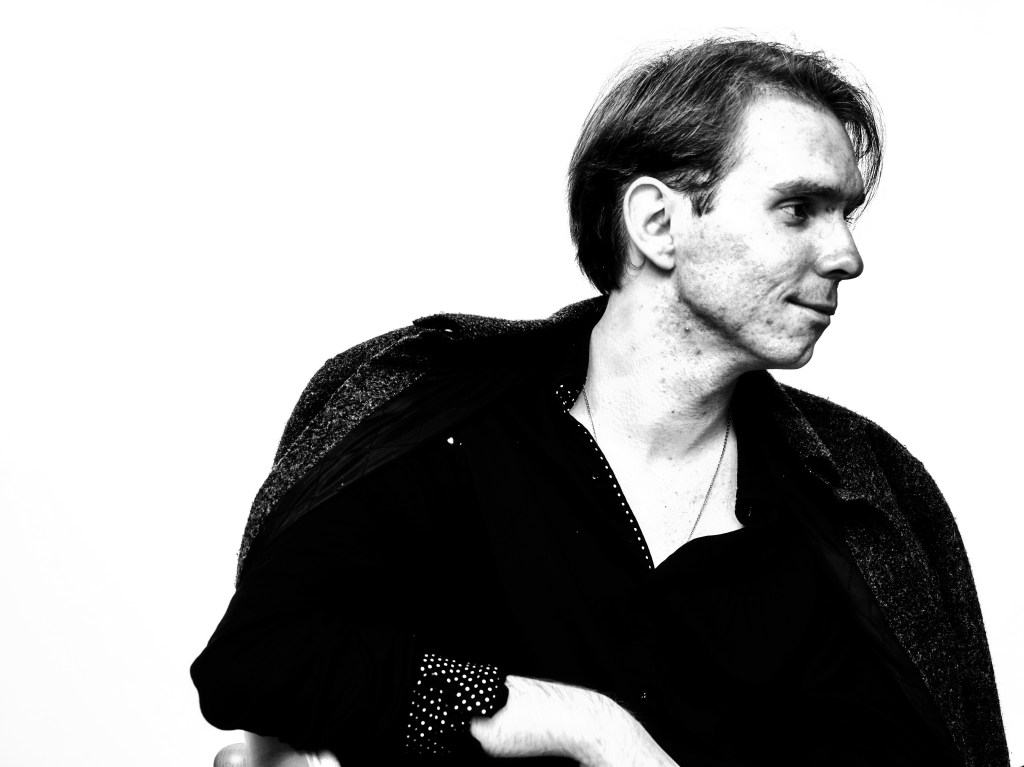
About the Author – Ectorius Angel
Ectorius Angel is a Lithuanian poet and classical author whose work weaves themes of displacement, impermanence, and the unsaid moments that shape human experience. Raised across Europe and now residing in Norway and Hong Kong, he draws from influences spanning Eastern traditions to Western romanticism.
His writing reflects a deep appreciation for minimalism, resonating with the balance of light and sound, often evoking nature’s shifting seasons. Through vivid imagery, Angel conjures tidal waves and gentle landscapes, using water and rain as metaphors for emotion and capturing beauty in fleeting moments. This connection to nature underlines his explorations of nostalgia, loss, and the sense of being a ghost—an observer in a distant world.
Mentored by an Australian historical author, Angel’s literary journey centers on the complexities of human existence. He delves into the brokenness of heroes and the disillusionment that accompanies admiration, prompting readers to reflect on life’s fragility and intricate relationships.
Inspired by luminaries like Osamu Dazai, Haruki Murakami, and Yukio Mishima, along with Western influences like F. Scott Fitzgerald and Oscar Wilde, Angel’s poetry transcends cultural boundaries. As an artist from marginalized post-USSR Lithuania, he channels cultural displacement into his work, viewing it as resistance against a world driven by greed and power.
Despite the challenges of his fading cultural legacy, Angel’s writing stands as a testament to resilience. His lifelong search for “home” and reflections on grief are imbued with emotional depth, inviting readers to connect with the beauty and pain of existence. Ultimately, he is remembered as a poet who illuminates the complexities of life, crafting meaning from desolate places.
Follow Ectorius on:
Purchase Shattered Reflections: A collection of poems featuring Ectroius Angel.
Amazon USA: Paperback
Amazon UK: Paperback
If you enjoy epic fantasy then check out my award winning Sentinal series, which is now complete. If you like fantasy books with a touch of romance then you will love my SoulMist series, start with SoulBreather. Prefer Dystopian Science Fantasy? Then try Harmony. Start the adventure and stay for the journey.
Sign up to my newsletter and download a free novella called Sentinals Stirring and get notified when my next books are published.
By clicking the sign up button above, you agree to share your email address with the site owner and the newsletter platform provider to receive marketing, updates, and other emails from the site owner. Use the unsubscribe link in those emails to opt out at any time.
By signing up to my newsletter, you agree to receive commercial information from Helen Garraway, located at 61 Bridge St, Kingston, Hertfordshire, UK (Data Administrator). You can withdraw your consent at any time. The data will be processed until the consent is withdrawn.


