Reviewed: June 10th, 2021 Released: September 29th, 2015 Genre: YA Fantasy
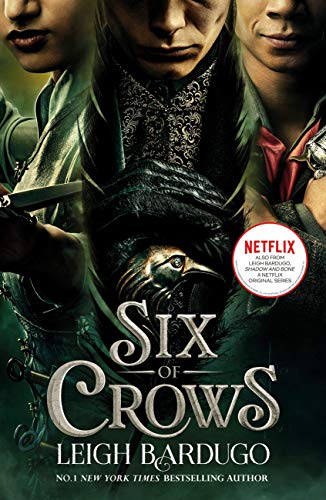
Criminal prodigy Kaz Brekker is offered a chance at a deadly heist that could make him rich beyond his wildest dreams – but he can’t pull it off alone.
First off, Let me say I wasn’t a fan of Shadow and Bone, which I thought was targeted at a much younger audience, but my daughter insisted that I read Six of Crows because it was so good and she wanted to discuss it with me!
I am glad to be able to say that I enjoyed this book so much more than Shadow and Bone. The characters had more depth and the story was more complex. Read More…
I am joined today by author Tanya Ross who releases the second book in her YA fantasy Tranquility series, on June 7th, 2021. Her series is YA fantasy set in a dystopian world. Book One is called Rising Up and the second is called Face Off. Welcome Tanya. Congratulations on the release of your second book in the series. Please tell us a little about your novels.
Tanya: The story which begins in Rising Up takes place in the future in a domed city called Tranquility. Every citizen signs a contract to agree to the laws, called Accords, which require them to wear a wrist device similar to a smart watch, called the Alt. The Alt measures emotions of the wearer. All the emotional responses are calibrated on a super computer and translated into points whereby the people are assigned a corresponding Status. Happiness and positivity are rewarded, and negativity subtracts from the wearer’s points. The Status determines their standard of living. Those who don’t manage their emotions well are counseled and can be banished from the city.
The female main character, Ember, goes into an emotional crisis when her mother dies from a mysterious illness. No one helps her determine why her young mother has gotten sick in a society where there is no serious illness. When her Alt crashes and she needs emotional support, a young hero of the city flies to her aid. The two of them endeavor to uncover the mystery of the death, and find that uncovering that is just the tip of the iceberg.
Helen: Sounds like a really interesting world. It would be interesting to see if rewarding happiness actually works. For some reason I don’t think human nature is that simple. Why did you call your first novel Rising Up?
Tanya: I called my first book Rising Up because this has multiple meanings:
First, people in this city “rise up” in their Status levels by being happy.
Second, Ember and her friends find they have to “rise up” against the government.
Third, “rising up” includes the effort to go beyond one’s circumstances to prevail.
Helen: Which gives us an idea that all is not tranquil in the world of tranquility. I thought it might be too good to be true. You have a second novel releasing today, tell us a little about Face Off.
Tanya: I have two works in progress. My brand new book is called Facing Off. It is coming out on June 7th, so I’ve been working on editing and formatting that book while also starting the third in the series. Facing Off is a wild ride! The characters begin their revolution, but they find themselves mainly trying to survive what happens to them, as they discover new secrets, escape from the city leader’s horrific traps and ultimatums, and learn whether they can even trust each other. It’s full of twists and turns and will take the reader to places they weren’t expecting.
Helen: Writing a series can be tough, how do you get the ideas to torment your characters with?
Tanya: With a series, it’s picking up the threads, characters, and themes of the previous book and continue them. I know what each character is going to be dealing with emotionally and what their relationships with each other will be. However, my family brainstorms with me a TON to come up with plotlines and situations for the characters. I owe a lot to them. My husband and I together determined the plot for Rising Up. My daughter gave me a slew of direction and situations for Book 2, Facing Off. I love that it’s a family affair.
Helen: That is so nice that you get to involve your family; writing can sometimes be a lonely affair. Tell us a little about your writing process, once you have all these ideas and suggestions do you map them out in a plan? or do you find yourself just writing?
Tanya: I have tried so hard to be a planner. But it doesn’t work well for me. I think I’m going to be a pantser for life. When I try to plot outside of the writing, it is boring and dead. Once I’m in the story, the characters take me places I didn’t expect to go. For my new WIP, which is book 3 of the series, I have done some plotting, but how much I will stick to it remains to be seen.
Helen: I know authors hate being asked this question,but do you have a favourite character?
Tanya: My favorite character is Xander, the rebel in the story. He is somewhat stereotypical of a rebel, but I love how he embraces his rebellion and his desire to be himself in such a genuine way. He’s funny and arrogant and sarcastic, which makes him fun to write. He grows throughout both the first book and the second, and I love to see how he changes and what he learns to value. My readers love him, too.
Helen: If you didn’t write dystopian YA fantasy what genre would you like to try?
Tanya: If I didn’t write dystopian sci-fi for young adults, I would write romance. I would especially love to tie in some history in the romance, too, so there’s an interesting setting amid the steam. Currently, there’s a paranormal idea for romance churning in my brain, though, too!
Helen: I’ve enjoyed chatting with you today, thank you for joining me. Congratulations again on the release of Face Off. Just to close us out, can you tell us what advice you would give other authors?
Tanya: I would tell new writers that persistence is key. There are going to be lots of times when you want to quit. When the writing gets hard, or you’re not in the mood. Or when you don’t think you’ll ever be successful. Or when you get negativity from people who read your work–or don’t want to. And with persistence, comes learning and practice, without which you cannot improve
About the Author:
For thirty-two years she was an educator of English, history, AVID, and student leadership. She loves teaching and kids, her students a daily inspiration. Her exit from the educational arena allowed her to indulge her hopes, dreams, and goals in what she taught for so many years–writing. This first novel begins her lifelong dream of writing meaningful novels for young adults. When she’s not creating new worlds, you can find her reading, spending time with her husband and two kids, or walking her golden retriever, Honey.
Reviewed: June 5th, 2021 Released: October 28th, 2017 Genre: Epic Fantasy
Summary
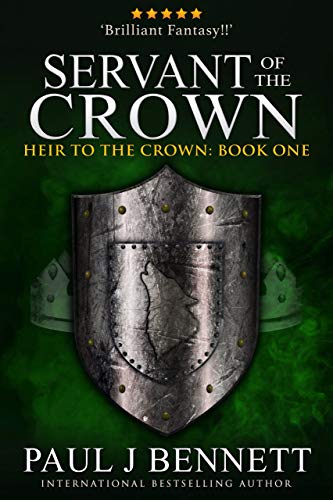
An old warrior, too stubborn to die. A royal heir, hidden since birth.
Can they save a realm on the brink of war?
Tragedy tears Gerald’s world apart and only his unwavering loyalty saves him. After serving as a soldier for years, a single act of self-sacrifice thrusts his future into the world of politics.
Cut off from all he knows, he becomes no more than a pawn to those in command. Banished with little more than the clothes on his back, he seeks a new purpose, for what is a warrior who has nothing left to fight for?
A fateful meeting with another lost soul unmasks a shocking secret, compelling him to take up the mantle of guardian. Bandits, the Black Hand, and even the king, he battles them all for the future of the realm. Read More…
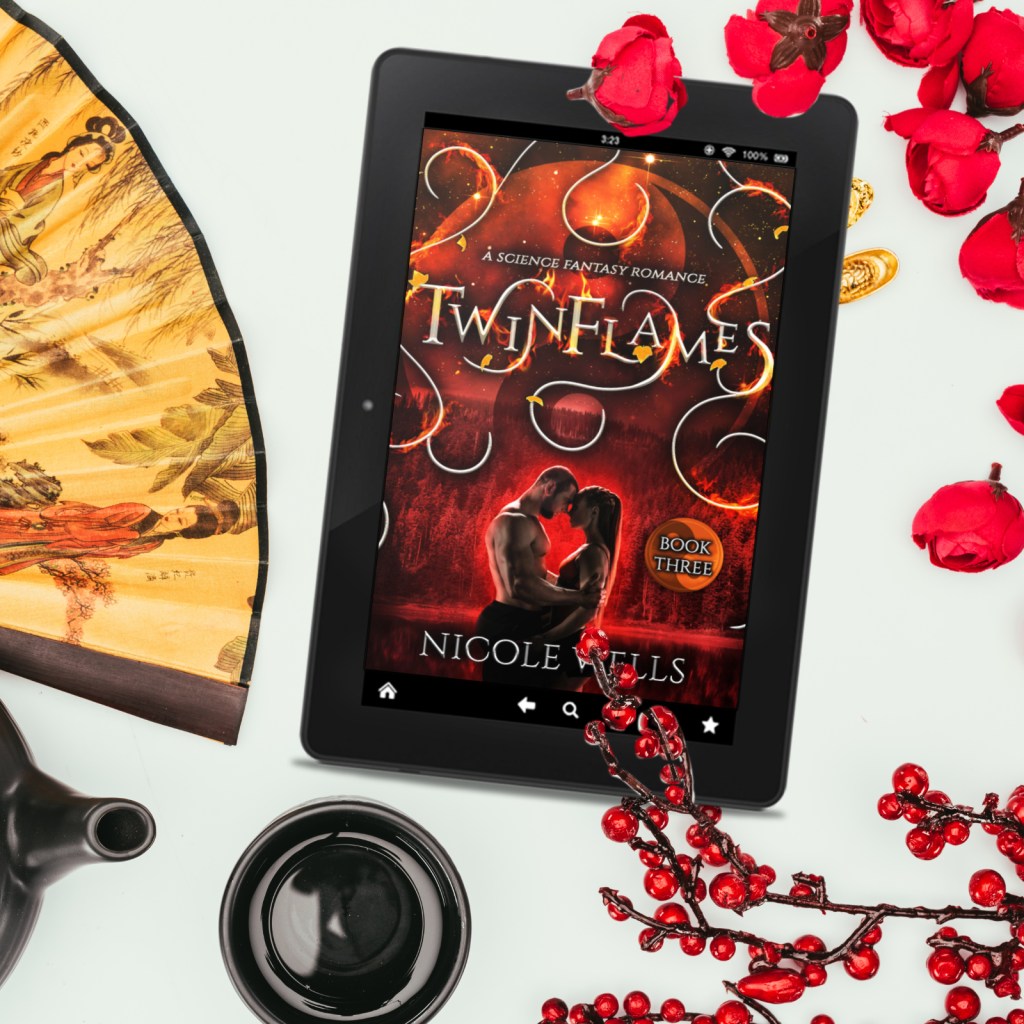
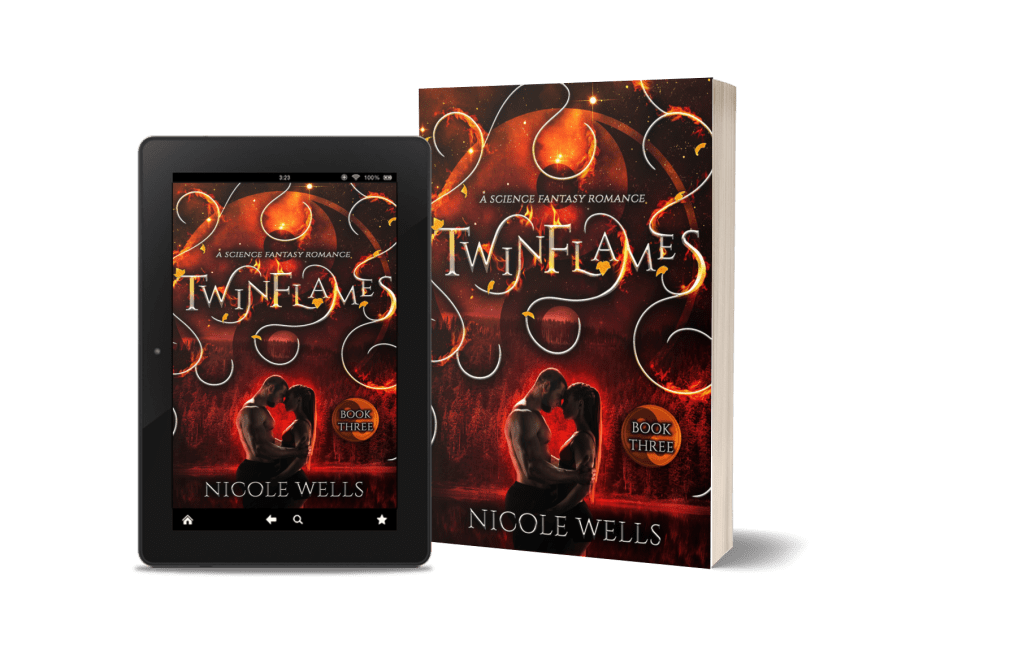
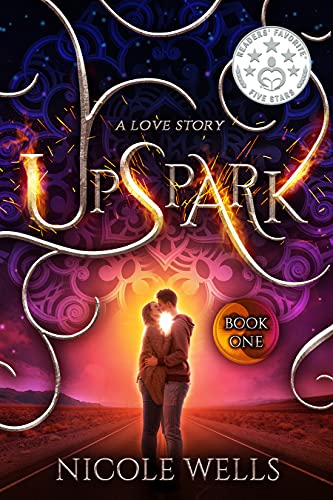
Joining me today to chat about her new novel, Twin Flames, which releases today, May 31st, 2021 Is fantasy author Nicole Wells. TwinFlames is the third novel in Nicole’s Science Fantasy romance series, The Five Elements. Welcome Nicole. Congratulations on releasing your third novel, quite an accomplishment. You must be so excited! Please tell us a little about your novels.
Nicole:TwinFlames is a science fantasy romance that follows Maia, who is seeking revenge for her identical twin and discovers she can teleport. Gabe is a renowned MMA fighter who falls hard. He was my attempt at an alpha male (yes, he turns into a giant teddy bear, what can I say?).
It’s book three in the Five Elements series. The series can be started with this book, although it’s best to read book one first since there are spoilers. These books are based on the Five Elements of Chinese philosophy and culture. I also work in indigenous culture and history (for this book, Nez Perce). There’s also an inspirational aspect to the series. In TwinFlames, Maia has to work on anger and forgiveness.
Helen: I read the book blurb and this sounds like a great series, so I am off to find book one, UpSpark! Tell us about the title, what made you call this book TwinFlames?
Nicole: It’s funny, because I set out to do five books in the series and this book ended up being Books three (WildWood) and four (BareEarth) combined: the Wood and the Earth powers. I like the idea of twins, showcasing both elements and also highlighting the destined mate aspect to the word “TwinFlames.” There’s a focus on those people in our lives that feel like they are a part of us, friendships that are bound to happen. It turned out perfect, because Earth’s story is best told this way. I still have each “book” as a Part One and Part Two (Part Three is TwinFlames), so the symmetry was beautiful, especially as the prior two books also had three parts.
With this addition, each title has some theme of fire and light: UpSpark, StarDust, TwinFlames. Taking a step back, even before there are five elements, there is Yin-Yang. These books are the Yang–the light. The last book, World of Water, is the polar opposite. It is the Yin, the unknowing, the fear, the dark, and the possibility. That is the epitome of Water energy.
Helen: Incorporating the natural elements and their meanings sounds so interesting. It seems to be human nature to understand where we fit, and what we resonate with. For example, our star sign, our birth stone, our personality. What made you write this particular book?
Nicole: Did I mention how much I love putting real life knowledge into science fantasy fiction? I have a Masters in acupuncture, and the gifts of the elements, the relationships between the elements (the Shen and K’o cycles), the way they manifest in a person, etc — it’s all real. Feng Shui, Chinese medicine, and more are based on this paradigm that’s over two thousand years old.
For example, a Water energetic is not likely to have their back to the door in a room, and they probably know a bunch of esoteric facts. They have innate skill, and can pick up things that it takes others years to master. They might have a love/hate relationship with salt. Wisdom and stillness resonate with them, but so does fear. There’s a tendency towards long earlobes and large noses.
An Earth will have a sweet tooth and full lips and is someone you definitely want as a friend because she’ll get you and be there for you. This is the quintessential “mother” energetic, full of sympathy and understanding. But she’ll certainly have problems with boundaries.
Metal tends to have good posture and dry skin, enviable complexion and great boundaries. There can be a spaciousness to their words and an almost otherworldly presence; you tend to listen when they talk. But they can be perceived as cold or distant. The sensations in their body ground them, so they might gravitate towards piercings or tattoos. Their connection to spirit is automatic, and they’ll know grief like no one else.
Fire is more prone to stuttering and flushing. When a Fire looks into your eyes, they can look straight into your soul. They connect with you, and can be the life of the party not because they are trying to but because there’s this magnetism and draw, like moths to a flame. Similarly, they can have issues with burning out.
Wood has strong nails, tendons and muscles and is probably having a really hard time with isolation because they need to interact with people. They are immensely creative and can also be competitive, although at heart it’s all about benevolence–they want everyone to win and just like to play. Their edge is with anger.
I could go on forever! I’ve practiced acupuncture for about fifteen years and I love incorporating it into these stories. I also have a strong science background and love weaving that in too.
Helen: This is amazing. I am trying to figure out which one I am already! Maybe Water? I’m not sure. What made you begin writing?
Nicole: I am a voracious reader, but started having a hunger for books that were a little more complex, deep and less predictable. I read in the magical genres I loved, but I wanted something that left me feeling more complete, like I was better for having read it. I was probably battling some mom guilt, too, and wanted my reading to be “productive” because I had “shoulds” hanging over my head, like I “should” meditate. So I set out to write a book that felt like that, one that was all about the present moment. That book was UpSpark.
Helen: I believe you’ve written a few books now, not just the Five Element series; which genre would you say you write in?
Nicole: Ha! I wish I knew! I think all my books will have some touch of romance and magic, but beyond that all bets are off. I’ve published books with spiritual, humorous, paranormal, magical realism, mystery overtones. My current WIPs include YA, dark fantasy, science fiction, epic fantasy, steamy adult reads and a children’s picture book.
Helen: Wow! How do you come up with all these ideas?
Nicole: I exercise. Seriously, I run on the treadmill in the dark with my music blasting. Other times stories strike as just idle thoughts. My biggest problem is having to cull all these ideas! There’s so many books I want to write.
Helen: So you’ve written quite a few books, but I know you’re also a mom of three. How do you fit writing into your everyday life? I’m sure there are a lot of writer’s who want to know the trick!
Nicole: Far too often I stay up until one or two am. Then my daughter wakes me up every two hours until I finally get up for good around six or seven. This I do not recommend.
I wrote Upspark in three weeks. Sometimes I would write a few sentences on my phone when I literally had five minutes of downtime, back when my baby was a newborn. I do not recommend that either.
Now I try to write primarily in the evening and weekends, but it takes a toll on family time. Brandon Sanderson recommends set boundaries. I’m working on that.
Helen: Yes, I am not so good at boundaries, I grab the time I can. So in your hectic life, with your brain on overdrive, do you plan your books, or are you a complete pantser?
Nicole: Okay, full disclosure. I have a book. A trilogy actually. I have been harboring this baby for thirty long years. She has become so built up in my mind, I can no longer craft the words into existence. So I outline. I have outlined the hell out of that story. There is now a whole network of twists and turns, like alternate realities to the same story, and I can’t make heads or tails of it. I have a smattering of non-temporal chapters, ill-fitting jigsaw puzzle pieces. I know what I want to do, and I look at that beast of a mountain built of notes, and instead sit down and gorge on chocolate instead.
I will write her one day, but in the meantime, I am a hardcore pantser.
(Total aside–is it just me or does that sound naughty?)
For someone who would plan every minute of the day (who am I kidding, for someone who does plan the day to the second), sitting down in front of my computer with nothing but the opening and end scenes and going on a merry ride to fill in the middle is exhilarating! I don’t know if it’s just me (probably is; I’m thinking a virtue of prosopagnosia?), but I often don’t recognize what I’ve written. So when I write and then edit (if enough time has passed) it’s like getting to enjoy someone else’s story!
Helen: I agree. Sometimes I’ll go back to one of my drafts, and I’ll think, Did I really write that? And then I get lost in the story again and forget I am supposed to be editing!
It’s been such a pleasure finding out about you and your books. Thank you for joining me. Congratulations again on the release of TwinFlames. Just to close us out, can you tell us what advice you would give other writers?
Nicole: Don’t compare. Don’t compare yourself to other writers. Don’t compare your works. Don’t compare how you were to how you are to how you want to be. Be in the present moment. Enjoy the journey and see if you can let go of attachment to outcome, at least most of the time. Stay open-minded, which will help you hear the things you need to and learn the skills to improve. Being free in this way lets you flow on your path, versus bucking and forcing and constantly “trying.”
I did not do these things. I suffered. I know better now, and that’s what I’d pass on so you can skip straight to the awesome parts of writing!
About the Author:
In the ethos where herds of story ideas run wild and free, I am known as the Devourer of Books. A voracious predator, I–
Okay. I’m a mom of three young children. And I spend way too much time in the fantasy world in my head. But, hey, in this world I’m still supernatural. I channel the powers of my insomnia for good. I’m impervious to kid whining and insults (well, mostly). I have a second sense for cereal disasters and broken toy catastrophes. They call me Mom, which is code for You’re-Awesome-We-Love-You or Stop-Writing-On-Your-Computer-and-Play-With-Me. I’m not sure which. My kryptonite is my pet peeves: water running down my elbows, food stains on papers, and losing the little plastic tethers when you remove the tags off new clothes.
So, yeah, that’s me. Your average superhero mom. Oh, and I’ve got three eyes (one in the back of my head).
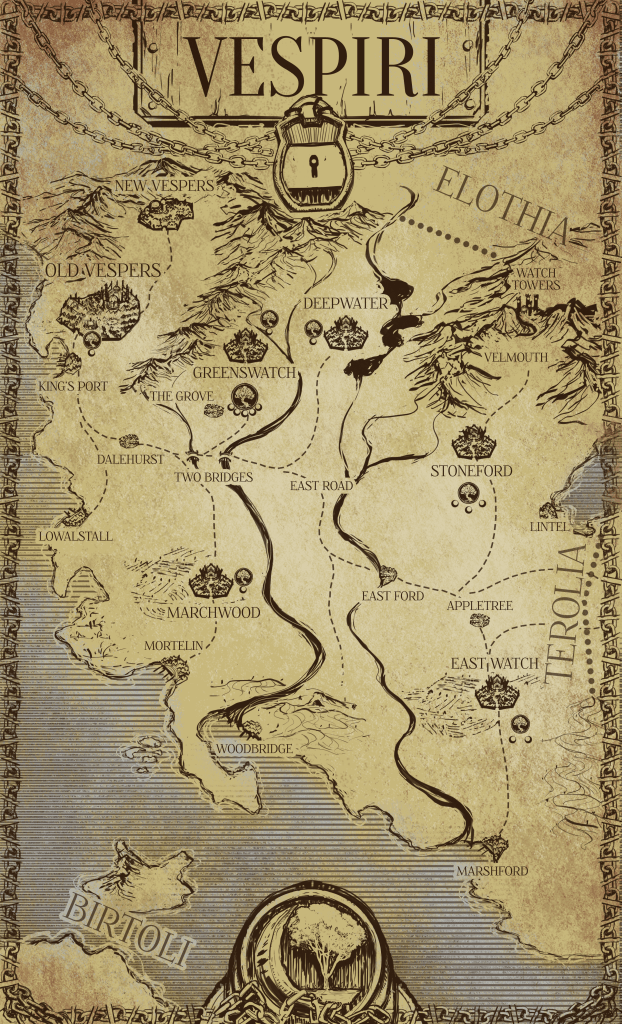
If you’ve read my novels, you’ll know I created the world of Remargaren. A diverse environment comprised of four kingdoms: Vespiri, Terolia, Elothia and Birtoli. Each has its own political structure, landscape, setting and culture, which drives the behaviour of its inhabitants.
The fun part of world building is that you get to create everything! A lot of the time you are creating backstory, so the story you are writing has depth and makes sense, but it doesn’t mean it is all included in the book. Even though some characters are only mentioned as a legend or ancient history, once upon a time they lived the events that made that history. I have so much backstory that one day there will be a prequel so I can use it all!
My starting point was the deities who created the world of Remargaren in the first place. The sisters Leyandrii and Marguerite. Goddesses who did everything they could to protect the people of Remargaren and its people, and I had my religious structure, and the source of the ancient magic.
As I started to write the first book, the environment began develop and the idea of basing it on the diverse countries found on the European continent was born.
Vespiri is predominantly forested; a land of trees and rich timber, lush green growth, plentiful water and arable fields. The sentinal trees are scattered across a system of Watches which divide the kingdom into manageable areas. Vespers, Greenswatch, Deepwater, Stoneford, East Watch and Marchwood.
Each Watch has a lord responsible for defending the land, who looks to the king, and each Watch has a council to help with day-to-day management.
Terolia is a hot and arid desert territory ruled by the nomadic Families. Water is scarce as are towns and cities, and sentinals. The Familes are led by a Medera and Sodera, the mother and father, and the family structure is core to their way of life.
There are six Families comprised of three main Familes: the Atolea, the Solari and the Kirshan, and three affiliated lesser Families: Kiker, Gusar and Miner.
Elothia is an icy territory to the north. Flat plains of icy tundra stretch all the way to ridges of snow-capped mountains. Most of the year, snow covers the land; only the southern reaches are ice free and arable. Food can be scarce when the winters are harsh, and the land remains frozen shortening the growing season and causing strife in the villages.
The Grand Duke rules Elothia, supported by his ministers and the generals that command his army.
Birtoli is an archipelago of islands extending to the south. White sands and turquoise seas, although beautiful, mean that without a boat, the islanders are constrained to the island they born on, and tend to coalesce in tight knit clans. The Birtolian Empire is ruled by an Emperor.
Diverse settings provide the opportunity to create different cultures, political structures and of course the vivid landscapes my characters live in, which also contribute to setting the mood an ambiance of a scene.
You can create a world as complex and diverse as you choose, or as simple as needed. It becomes the canvas on which your characters live their lives. They react to and manoeuvre through the different territories, and the setting provides the opportunity to create more obstacles and conflict and we enjoy their adventures as the characters deal with them. The reading experience becomes immersive because you can imagine the world, and you can picture yourself in that environment, and you can compare your reactions to those of the characters.
World building is a core component of high fantasy as we need to explain the world our characters live in. High fantasy means that the book is not set in the real world. It is not set on Earth; it is not real. An integral part of this is a map. A map helps a reader visualise where the characters are, and as they traverse the world, you can follow their journey as well. The majority of the time, a high fantasy novel will have a map.
The author uses a map to keep track of distance and locations. One of the hardest parts is consistency when writing a novel. It is so easy to be inconsistent, and a map helps you to see that actually Old Vespers is in the west of Vespiri, not the east for example, or that Stoneford Watch is in the east and borders Elothia to the north and Terolia to the east, and that is where it will always be!
I hope you enjoy the world building in the Sentinal Series and fall in love with the wonderful world of Remargaren and its diverse peoples and cultures.
Book One: Sentinals Awaken is set in Vespiri.
Book Two: Sentinals Rising starts in Vespiri and ends up in Terolia.
Book Three: Sentinals Justice, due to release in the fall travels to Elothia.
Reviewed: May 27th, 2021 Released: May 4th, 2020 Genre: Fantasy
Summary
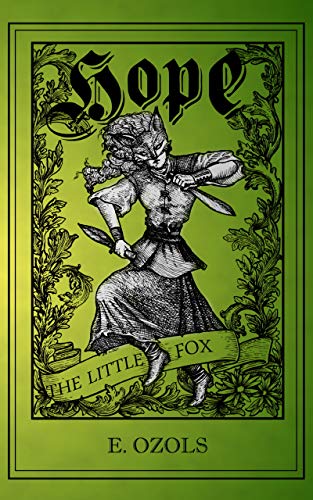
Hope is a wild and carefree child growing up in a remote cottage near the coast. Hope’s high-born mother worries her unruly daughter will never become a proper lady living out in the wilderness, while her father, a grizzled military leader, does not share this concern. Instead, he encourages his crafty daughter to run free and explore, giving her the nickname “Little Fox.”
What a great book. I thoroughly enjoyed how Hope developed and how she coped with and faced the challenges of her world, purely because she was girl. If she had been a boy, the world would have been her oyster. Instead, she had to hide her greatest skills, and learn how to disseminate and pretend to be something she didn’t want to be. Excellent read, you won’t want to put it down. Read More…
Reviewed: May 25th, 2021 Released: March 7th, 2021 Genre: Fantasy
Summary
A well written, character driven fantasy, with plenty of action and adventure, and a touch of awkward romance thrown in, giving plenty of room for misunderstandings! Dumbrell has created a wonderful world that will keep you entertained and asking for more.
Cyrus is a storyteller frustrated by the mundane trappings of village life, while Prince Augustus struggles to meet high expectations after an upbringing of royal privilege in the bustling capital.
As both try to forge their own paths, a royal assassination unexpectedly closes the gap between them. The nation of Easthaven is thrown into war with their oppressive neighbours, and so begins a conflict from which neither can walk away. Read More…
Reviewed: May 21st, 2021 Released: January 10th, 2021 Genre: Contemporary Romance
Summary
Seven years ago, college student Hill Taylor attended a journalism conference and ended up having an intensely hot hookup in a coatroom with a too-sexy stranger.
Hill is now a successful publicist for rock’s notorious bad boy Tommy Kaine, who’s about to dish the outrageous dirt in a tell-all written by tabloid reporter James Spencer Sutton (aka The Hollywood Hatchet) – Hill’s coatroom hit and run. Problem is, Tommy’s got a secret that Hill has been sworn to protect and more importantly, keep the still-too-sexy Sutton from uncovering. Read More…
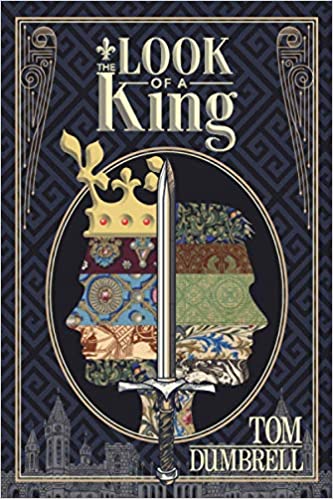
Today I am finding out more about British Fantasy author Tom Dumbrell, who is the author of his debut fantasy novel The Look of a King, which released on March 7th of this year. Welcome Tom. Congratulations on launching your debut novel, quite an accomplishment. Please tell us a little about your novels.
Tom:The Look of a King is my debut novel. It’s a fast-paced adventure that pays homage to classic fantasy while trying to provide the genre with an accessible, contemporary voice. It’s the first book in a trilogy and is a quick read at only 270 pages in length. The idea was to create a story full of twists and danger, and to deliver the plot through a cast of relatable characters.
Helen: It sound really intriguing, so I went to find it. I am about half way through so a book review will be coming soon! Tell us about the cover, what inspired the design?
Tom: The cover was something that came to mind very early in the writing process. It reflects the two main protagonists in my story, Augustus & Cyrus. I can’t say too much without betraying the plot, but the book explores the similarities (and differences) between the two boys and how their stories become intertwined. I am very fortunate to know a graphic designer who took my original concept for the cover and turn it into something that I am very proud of.
Helen: It is a lovely cover. What makes a king we wonder? I imagine that is why you named the book A Look of a King?
Tom: As with cover art, the title is one that makes far greater sense to those who have read the book. Not a very helpful answer, I know! “The Look of a King” is a direct quote from within the book and has a few different meanings. Loosely speaking however, the story explores what it means to be a king and behave like one. It’s a tough thing to find a title, but this was never in any doubt and I’m lucky that it has not already been used a thousand times!
Helen: What made you write this particular book?
Tom: It was a lifelong ambition of mine to write a book, however this particular project was enabled by unexpected redundancy April 2020. I worked (and work!) in the Travel Industry and the extra time and freedom enabled me to turn an idea into reality. Like most authors, I have plenty of unfinished projects, but ‘The Look of a King’ was an idea that came at just the right time, providing a sense of purpose and escapism when I needed it most.
Helen: A wonderful bonus from a terrible situation. I am glad you managed to find a silver lining from what must have been a difficult time. I think writing is a form of cathartic release, I know I began writing after a difficult time in my life. What was your inspiration to choose to write?
Tom: A desire to remain active and productive during redundancy, but also a love of books and in particular, a desire for more fantasy books that are not centred around magic systems and mythical creatures. I know that these are hugely popular, but not always to my tastes
Helen: You write fantasy. Who or what inspired you write in this genre?
Tom This series of books is my only work to date and is a work of fantasy albeit not a magical world. I’m told that it reads like Historical fiction. This is very much aligned with the type of books that I most enjoy reading, so perhaps no surprise! My wife is a huge reader but also a professional editor. Her feedback helped me to shape the story and start to realise the project as a reality – I would never have been able to complete it otherwise. From the perspective of authors – I would cite Pullman & Tolkien as my childhood inspiration, more recently Joe Abercrombie, Scott Lynch and Chris Wooding to name but a few.
Helen: How do you come up with ideas for your books?
Tom: For ‘The Look of a King’ I literally woke up with a broad outline of 18-chapters which were then hand-written for reference before my wife/editor helped me to shape it into something more conclusive. When writing the sequels, I am now finding that the ideas are driven by the characters.
Helen: You’ve already said, The Look of a King is the first book in the series, tell us about your current work in progress.
Tom: I am currently writing the third and final book of the ‘Pillars of Peace’ trilogy (of which The Look of aKing is book one). I am editing the second book concurrently ahead of an October release with one eye toward my next project!
Helen: So exciting, not long to wait for the next book then. Which type of character do you prefer to write, and who is your favourite character in your books?
Tom: For me personally, I find it easier to find a villain’s voice. I quite enjoy dialogue and find that you can really express your villainous character through those exchanges. My ‘hero’ is a fairly reluctant one, so the traits tended to be delivered through actions more than words.
Cyrus is my favourite character. He is one of the main protagonists and the one whose character and decision making most closely resembles mine. He is the character I was always destined to write; I think.
Helen: Cyrus has to overcome quite a lot. I bet he was a great character to write. Let’s talk about your writing process for a bit. Tell us about where you write.
Tom: I’m not one for moving around, and UK weather rarely permits outdoor work, so more often than not, I am at the same desk that I use for the day job. It’s probably not the most inspiring space and is often shared with my three dogs but it’s a permanent set up where everything works and I can focus on the important stuff, the writing!
Helen: Yes, I am quite jealous of those writers string out over an amazing view, with the sea in the distance! Though maybe I would spend more time staring at the view instead of writing, so maybe that’s not such a bad thing after all! So you’re concentrating on your writing. Music or silence? Pantser or planner?
Tom: 100% no music! I need silent conditions for my art! 😛 Book One and Two were definitely planned, so that I had a beginning, middle and end checkpoint for each chapter. Book Three I am writing with a little more freedom and it has created some nice surprises albeit I expect a larger job on pacing etc in the editing process, to reverse engineer that planning process.
Helen: I’m the opposite. I always listen to music! Which do you prefer, writing or editing?
Tom: Writing. I admire the editing process, but I am someone who wants to finish a task and move on. My wife is my editor as well, so that creates a fair bit of healthy tension at home!
Helen: Even though we fantasy writers build our own worlds, I find it quite surprising how much research is still required. Do you find yourself spending a lot of time on research?
Tom: Writing in a fantasy world does give you a bit of freedom to make things up as you go – however, my book offers a setting that is similar to Medieval Europe, so there are certain words and technologies that contribute to the aesthetic or detract from it. Most of my research is done on the go and is usually: When was this word/object first used? Or specifics about period clothing, weapons, fighting techniques. Oh, and a whole lot of Google searches for synonyms!
Helen: Thank goodness for google! It is often said a writer should write every day. Do you find it difficult to write everyday?
Tom: At the start I was very hard on myself, forcing it at every possible opportunity. Over time, I’ve learned that inspiration tends to come when you least expect it and that reading is, in itself, an important part of the process. With this current book, I am just trying to read as much as I can and write when I know I have something to say!
Helen: I agree reading is important to all writers. What are you reading at the moment? Do you have a favourite author?
Tom: My favourite book is The Blade Itself by Joe Abercrombie. It’s dark, gritty and has the most unique characters that I have ever read. A perfect book for me!
My current read is Valour by John Gwynne. A purchase inspired by legions of fans on Instagram. It’s a fantasy epic with multiple POV which is a great read while contributing plenty to my own writing! I’ve also been trying to read some classics. I loved Great Gatsby and Around the world in 80 days, in particular. These books are beloved for a reason and I enjoy seeing the evolution of writing styles over time.
Helen: What is the most useful piece of advice you’ve been given as a debut author?
Tom: That’s a tough one. I had literally no background in writing so everything that I hear and learn has value. Perhaps the biggest hurdle at the start was understanding POV. Once I understood which characters I was following; their voices, limitations etc, it made a massive contribution to the way that the story was formed and delivered
Helen: It’s been such fun chatting with you today, thank you for joining me. Congratulations again on the release of The Look of the King and good luck with the next book. Just to close us out, can you tell us what advice you would give other authors?
Tom: Read about writing. There are some amazing craft books out there. Stephen King’s ‘On Writing’, Philip Pullman’s ‘Daemon Voices’ and anything from Ursula le Guin in particular, for fantasy. It’s also really healthy to listen to authors speaking about their processes and to understand that everyone is different. Ultimately, stick at it and you’ll find your way. If one person enjoys your work, it will all be worthwhile – especially if that person is you!
About the Author:
Tom was born in 1987 in Chelmsford, Essex. As a boy, he fell in love with the fantasy worlds of video games and those written by the likes of J.R.R Tolkien and Philip Pullman.
Despite an early passion for storytelling, Tom obtained a BA in Tourism Management before a varied career in the travel industry, bringing to life another of his passions. When he is not working, Tom is an avid fan of his beloved Ipswich Town. He also writes and performs music and enjoys long walks with his wife and dogs.
Tom currently lives in Colchester, Essex, and The Look of a King is his first novel, written during the 2020 pandemic with huge influence and editing support from his wife, Breana.
I am joined today by author Andrew King to talk about his debut thriller novel, Cold Blood. which released April 2nd, 2021. Welcome Andrew. Please tell us a little about your novel.
Andrew: My book is called Cold Blood. It’s about a detective in Victorian England covering for the fact that his wife is a serial killer.
Helen: What made you call your novel Cold Blood?
Andrew: Originally the title of the story was The Vampire Detective but I thought that was a bit too on the nose so I decided to change the title to Cold Blood as a reference to the phrase “to kill in cold blood” meaning to kill without remorse.
Helen: It sounds appropriately chilling! What gave you the inspiration to write this book?
Andrew: This particular story had two inspirations, the book The Strange Case of Dr Jekyll and Mr Hyde and the killings of jack the ripper. I first read the first in English literature taught by David Dalrymple and the second in History taught by Mrs Bugler both of whom have been thanked in the acknowledgements of the story.
Helen: Your book sounds really intriguing, part historical and part fantastical. Did you do a lot of research for your book?
Andrew: I don’t do a lot of research, honestly. I wrote the story and looked through it trying to find things that stand out as inaccurate and checked if it was. most of my stories have less of a focus on realism.
Helen: What inspired you to first start writing? Was there anyone in particular that lit that spark in you?
Andrew: I began writing when I was 14 after a, particularly long day meaning the main thing that made me start writing was boredom. I decided to continue writing after I showed a few people because I realised how much I enjoyed entertaining people. In the beginning, there wasn’t a particular person that inspired me to write mostly because I didn’t take it too seriously but the closer to cold blood I got and I talked to more writers I found more people that inspired me, If I had to say now it would be Myria Candies, author of Black Hollow, The Bitter Taste and White Embers.
Helen: Congratulations on finishing your first novel, and now you’ve written a thriller, what’s next?
Andrew: I plan on writing a mix of genres but this book is historical fiction because of its main inspiration, The Strange Case of Dr Jekyll and Mr Hyde. Both stories are set in 1886.
Helen: How do you get ideas for books?
Andrew: Most of my ideas for stories, of which I have 21, come either from reading other works of fiction, like Cold Blood was, or general observations of the real world like my current WIP, Cup of Sleep, which was inspired by all the people saying they couldn’t survive without coffee.
Helen: Oh my, that’s great to hear. Tell us more about your latest work in progress, Cup of Sleep. That sounds like a really fascinating premise.
Andrew: My current work in progress, as mentioned in the last question is called Cup of Sleep. the basic plot is that a coffee company has taken over the world and has made sleep illegal so people need their coffee to stay awake. the main character finds a product called a sleep pod and must hide it from the government because the punishment for sleeping is death. the two main inspirations being all the people saying they couldn’t survive without coffee and how boring I thought 1984 was.
Helen: Every writer has a different way of writing, and favourites elements. Writing thrillers I suppose you have an interest in writing villains. Do you prefer writing Heroes or villains?
Andrew: I definitely prefer writing villains, I like seeing how people react to the evil things they do, both the reader and the characters in the story as we don’t know how we’ll react to something until it happens.
Helen: Tell us about your writing environment. Do you have time to write every day?
Andrew: I don’t find fitting writing into my everyday life difficult because I am a student in college. for the most part, I have one lesson a day and that lesson is two hours long meaning when I get home I have plenty of time to do both work and writing. I do listen to music, I write on my computer and have youtube open on a different tab. The main people I listen to are Dodie Clark, Anna Akana and The stupendium. there is no writing-related reason I just love their songs.
Helen: What is the most useful piece of writing advice you have received?
Andrew: I would have to say that the most useful is not to edit as I write that was given by the previously mentioned Myria Candies. This is because doing that will prevent progress as you constantly look at the same section without writing any more.
Helen: Thank you so much for joining me today, it has been a pleasure chatting with you. I wish you all the best with your next book. Just to close us out, can you tell us what advice you would give other authors?
Andrew: The main advice I would give is simply to start small, it was a problem I had when I started writing that I would try to make everything much bigger than it needed to be for example my first story being part of a five-book series, I didn’t have the skill to write a series yet I was trying anyway.
About the Author:
Andrew King is a self-published author whose main goal in life is to entertain others; we will see how successful that is. Born in Manchester, Droylsden to Edward and Sarah King I first began writing when I was in Secondary school at the end of a particularly long day. I wrote many stories in private until the year 2020 when, during lockdown, I decided to try and publish one. Cold Blood was born.









 Helen Garraway