Reviewed: September 23rd, 2021 Released: December 8th, 2020 Genre: Epic Fantasy
The Dryad’s Crown series is not just a book series, is it a work of art. From the delicate earthy covers to the beautiful illustrations you’ll find inside. A Slow Parade in Penderyn is the first novella.
In the port city of Penderyn, Silbrey once served as a soldier for the cruel, ambitious guildmaster. Silbrey escaped the city and her life of violence by rushing into marriage and motherhood. Now she returns to Penderyn to atone for her crimes and confront the guil
Silbrey discovers there is more to her past than even she realized, beyond the familiar cobbled streets of the city. What begins as a fairy tale transforms into an epic adventure about love and loss—and a woman with a strange connection to the natural world. Read More…
Today I am talking with author Jonathan Taylor about his new release. Welcome Jonathan, Congratulations on your new release! Please tell us about your new uban fantasy novel which released on September 15th, 2021.
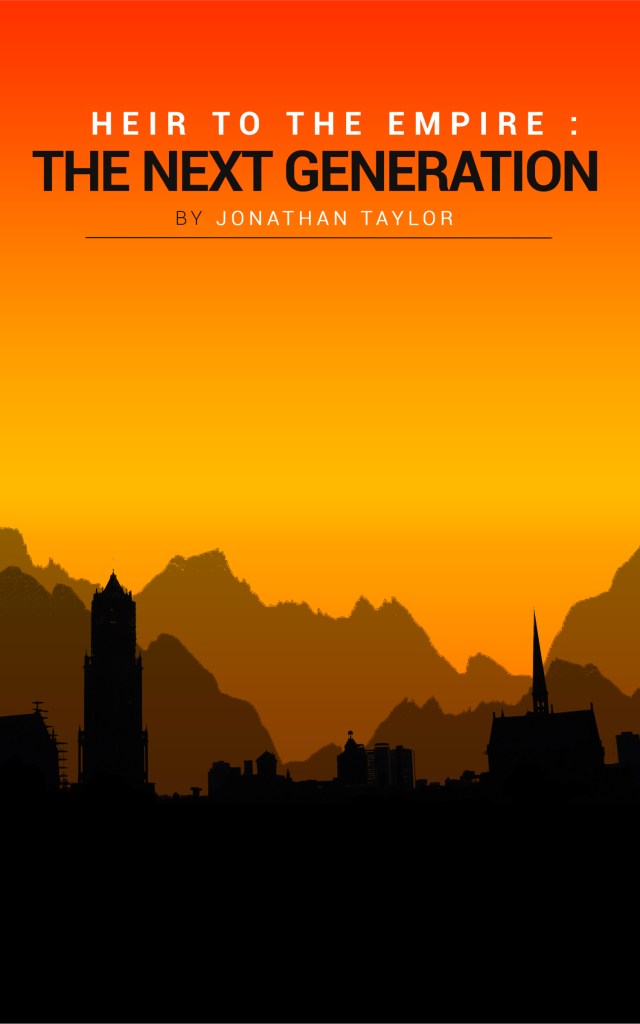
Jonathan: My current book is called Heir To The Empire: The Next Generation. There are two potential lawsuits I am risking with this title, which I hope I can counter with countersuits and then an out-of-court settlement that allows me to still use that name. I introduce it as an urban fantasy coming-of-age action-adventure story. The protagonists are officer cadets enrolled in the best military university on the continent. They have to learn to work together and with others while dealing with their curriculum, as well as facing against a terrorist threat.
Helen: Lets’s hope artistic license is approved! Is there a specific meaning behind your cover design?
Jonathan: My cover is meant to seem dangerous and inviting at the same time. It depicts a mountain range in the background with dark building outlines in the foreground. It alludes to where two of the most consequential and meaningful scenes of the book take place, where main and supporting characters come up against and deal with the ultimate obstacle, the threat of death.
Helen: The colours are beautiful, so rich and vibrant. What made you begin writing, and then to write this specific story?
Jonathan: I wanted to be a writer for a long time, but it took me a long while to come up with a concept I could trust and believe in that would make for an interesting story. I had a few in mind ever since I finished high school, and I’ve been refining and expanding upon them for years until I found the one for my current book. I loved just how versatile it could be, all the stories that it allowed me to tell. I’ve been turning it in my mind for a while, and then, two years ago, I was satisfied enough with how it was shaping up that I wanted to have it written down.
Helen: Congratulations on completing your book, and then publishing it as well. Did you find you had to do a lot of research to write your book?
Jonathan: My approach to research is a bit more abstract than that of most authors. I actually do a lot of research or learning in private, not connected to any other activity, depending on whether or not I find out about anything that arouses my interest, and my interest can be aroused by a whole slew of sometimes bizarre curiosities and happenings. Consequently, I have a wide array of interests and a substantial database in my brain. When it comes to using information for my book, the question often isn’t “What do I need to find out?”, it’s “What can I already say about this?”, or “What part of what I already know can I use to flesh this particular aspect of the story out?” When I do in fact research specifically for my book, it’s usually very brief, and on something very specific, like the symbolism behind names.
Helen: A head full of ecletic information and trivia is a must for authors! Who knows where the next idea will come from. When you wrote your book did you have the story all planned out, or did you find the plot going places you never expected?
Jonathan: I’m definitely a planner, I need to find a framework for my ideas before I let them flourish. Within that framework, however, there is plenty of room for improvisation. My process starts from a short description of what I want the book to be about. That description could be a sentence or a paragraph long. From that point forward I go into cycles of expanding and dividing. From the initial paragraph, I get a phrase that describes each act, then expand upon each act, then divide it into story beats, then expand each beat before dividing them into chapters. I’ll usually have three main points or sentences per chapter, and that is where I allow myself to go free form, expanding those points until they reach a chapter in length.
Helen: Heir to the Empire is an urban Fantasy coming of age novel, if you didn’t write fantasy, what genre would you like to write?
Jonathan: I’ve been single for (much) longer than I’m willing to admit, and in the mean time I’ve turned to erotic roleplay to spice up my private life. When you think about it, erotic roleplay is collaborative erotic fiction, a field where you get instant feedback on almost anything you try. Through experimentation, trial and error, I’ve become quite good at captivating my audience, and received my fair share of compliments, and I think writing erotica would suit me. If I find another author and we were to write collaboratively, say a chapter at a time or a page at a time, I think that would make for some fun books.
Helen: I’ve always thought collaboration on a book must be far more difficult than writing it on your own. You’ll have to let us know how you get on if you choose to collborate. What about when you are not writing. How do you fill your time?
Jonathan: Whenever I do have time for hobbies, it’s usually through external circumstances, i.e. something else is preventing me from spending as much time as I would need to take care of the writing process. Whenever that happens and I have anywhere between ten minutes and an hour and a half to burn, I’ll usually pull out my phone and indulge in a fighting game, or spend some time on YouTube. What I watch on YouTube varies quite dramatically, depending on what recommendations I get. It could be a review, could be a video essay, could be something educational (I grew up on documentaries and stuff that is even similar to that still hooks me), could be a gameplay video, could be humour, could be memes, could be some combination of the above, or something entirely different. I also try to schedule time to work out, whatever form that may take, but my success in that field is a bit more mixed.
Helen: There is access to so many different types of media nowadays, all at your fingertips. With so much choice, do you still find time to sit down and read?
Jonathan: I don’t think you define recently as “the last 12 months”, but that is how far back I want to go for my answer. The books that stood out for me in that time are A Sea Of Pearls and Leaves, by Rosalyn Briar, the as-of-yet-incomplete Outcrossed series, by River J Hopkins, and The Witcher saga, by Andrzej Sapkowski. I also did reviews of each of these books, and a few others, on my YouTube channel, and those contain my thoughts on these books in more detail. In short, Rosalyn has an amazingly fluid and immersive writing style, which, coupled with sympathetic and relatable characters, makes for a very engaging read, River is exquisitely adept at blending pop culture and mythology and various other interests she holds dear into creating a rich setting with layered plots and immersive storylines, and Sapkowski managed to create a varied and rich world that comes to life in almost every way such a world can come to life, while also reasoning how those who have to exist within that setting manage to do so. If you like your time and money, there are few ways to spend them better than reading these books.
Helen: Finding time to read can be challenging, but I think it is important for writers, and aspiring writers to read as much as they can. To understand and experience the craft and to see what works and what doesn’t work for them.
I appreciate you spending time with me today, congratulations again on your book launch. Just to end with, what piece of writing advice have you received that you would like to share with other aspiring writers?
Jonathan: Around the time I started writing, text-to-speech videos of various AskReddit questions and answers became very popular on YouTube, and they were a guilty pleasure of mine. One of those videos, about useful pieces of advice, gave new writers the advice that they should write 200 words a day, at least. You can and are welcome to write a lot more, but when you write, ideally every day, you should set your floor at 200 words. Doesn’t seem like much, but it’s enough to build a habit, and eventually 2000 words a week will just be a breeze to you. That is also the advice I give to new writers, set yourself a minimum, and then dare to raise it whenever you need to.
About the Author:
The boy who would become Jonathan Taylor was born in Bucharest, Romania, to white-collar parents from blue-collar backgrounds. Growing up, his up-bringing was mostly formal, he stuck to what his parents set out for him and generally at least tried to stay out of trouble. He did well enough in school to be able to attend a leading technical university in Germany, but his creative drive, stirred in his youth by the works of Jules Verne, HG Wells, and Isaac Asimov, remained as active and eager as ever, and after graduating, he has become quite a bit more capable of indulging it. He now writes in order to allow his constantly stirring mind to settle.
Join me as I chat to Christopher Mitchell about his epic fantasy series the Magelands Eternal Siege, which is now eight books long. I have read the first book The Mortal Blade and it was amazing. You can find my review here. Welcome Christopher, it is lovely to meet you. Congratulations on the release of your latest installment, Red City. Tell us about your wonderful series.
Christopher: I release around six books a year, and am usually in the process of drafting one, while editing another, and releasing a third at the same time. My most recently published book was Red City, Book Eight of the Magelands Eternal Siege series, and it was released on Friday 10 September 2021. The Eternal Siege series, when complete, will consist of four interlinked trilogies, followed by a four-parter, and Red City is the second volume of the third trilogy (the ‘City’ trilogy). It follows on directly from Book Seven, and picks up the threads of the main characters. Like the previous series, it centres on the members of a single family – the Holdfasts, and every book has at least one Holdfast as a main character. In Red City, that honour falls to Kelsey Holdfast, the youngest daughter of the family. The main theme of the book is the possibility of redemption. Two old characters are re-introduced, both of whom have done some terrible things in the past, and both start off with every intention of trying to redeem themselves. One succeeds, while the other one fails, and the novel ends with the catastrophic consequences of that failure.
Helen: The life of a writer can get extremely complicated, and releasing six books a year is phenomenal. I have to say I am a fan of your covers they are absolutely gorgeous. Tell us about how you first came up with the concept.
Christopher: The cover of Red City is a character portrait of Kelsey Holdfast, complete with a little image of her dragon in the top corner. Each book of the Eternal Siege series has a portrait of one of the main characters of that novel on the cover. This came about due to the acquisition of the first cover, for Book One – The Mortal Blade, which was produced by MIBL Art. It fitted perfectly with the character of Aila, a demigod assassin and shape-shifter, and that choice governed the types of covers that would go with the rest of the series. MIBL have done a fantastic job with these covers, producing some beautiful artwork, and I think Red City is a great example of that – it encapsulates exactly how I pictured Kelsey in my head!
Helen: They are very distinctive covers, and you definitley recognise them as yours. How about the book titles? Is there a story behind those?
Christopher: The names of the books in the Eternal Siege series follow a set of patterns, and for the City trilogy, each book had to have ‘City’ somewhere in the title. The use of ‘Red’ covers several meanings – for instance, the sky of the City is red, rather than blue. The city is plunged into a chaotic civil war during the course of the book, and red also stands for the bloodshed that results. It also stands as a warning; as both sides in the war stoop lower to gain victory, the survival of the city itself is at stake.
Helen: Your series is epic fantasy, what made you choose that genre?
Christopher: I chose the epic fantasy genre originally as it seemed to me to be the best way to express the ideas that were rattling around in my head. I pictured a blank canvas, one that I could paint with whichever colours I liked, free from the restraints of following a prescribed framework.
Helen: I must admit the freedom of creating your own world is what tempted me to start writing fantasy. I started writing quite late in life, and after being a lifetime bookworm, I started to write my own stories. When did you know you wanted to be a writer?
Christopher: I’m not sure there was a time in my life when I wasn’t thinking about stories. I started writing my first books when I was about twelve years old, then moved on to write role-playing games for my sister and friends to play. I sweated and toiled over a couple of novels in my late teens and early twenties, which, if I look back on them now, were pretty awful, but it was all part of the long, slow process of getting there in the end. I almost gave up on many occasions; constant rejections can be tough, and wrote almost nothing in my thirties except for factual reports for my day job, and essays for my post-graduate degree on Greek Tragedy.
Helen: I think resilience has to be a key trait of any writer, and an innate belief in yourself, that you can complete your story. Was there anyone in particular who inspired you to write?
Christopher: When I hit forty, my wife kept asking me – ‘when are you going to write a book?’ So, one evening, when a friend of hers was round visiting, I retired to my little study and thought ‘alright; let’s give it a go.’ The notes I wrote out that night became the basis of the worlds where the Magelands book are all set; all the basic precepts were put in place, and three months later, I started writing the first book. If my wife hadn’t pushed me at that vital point, then there is a very good chance that none of the Magelands would exist. She had faith in me, and that is exactly what I needed.
Helen: Thank goodness she did! Considering you have plans for many more books in this series, how do you keep coming up with new ideas?
Christopher: Create an interesting world with complex characters, then the ideas will take care of themselves. Drop any notion that characters are good or bad – everything is grey. If in doubt, add in some dragons.
Helen: Dragons solve everything! What is the most useful piece of writing advice you’ve received, and from whom?
Christopher: Drop adverbs when writing dialogue. Instead of writing ‘she said excitedly/sorrowfully/wistfully’, use the dialogue itself to transmit the appropriate feeling, and trust the readers to work it out for themselves. This simple piece of advice led to the cutting of over a thousand words from my first book! It was given by a lecturer in creative writing, at the only session of hers that I attended. The lecturer didn’t know what genres her students were writing, and she called fantasy ‘pathetic’ in front of the class. I didn’t return.
Helen: That is good advice, and one I try to follow as well. Shame she wasn’t a fan of all genres of writing, her loss, I think. With writing and releasing your books at such a phenomenal rate – your books are not short! – I am amazed at how fast you write. How do you fit your life around your writing?
Christopher: For almost a year, I have been in the fortunate position of writing as my full time job, so I fit it in nine-to-five. Prior to that, it was hard, I won’t deny it. I used to cram writing into any free time I had – evenings, weekends, holidays. I’d come home from my day job, tired out, then help put the four kids to bed, and then have to get myself back in front of the keyboard, no matter how much I couldn’t be bothered.
Helen: When you are in your writing zone, do you prefer silence, or do you have a favourite playlist running in the background?
Christopher: I have tried, but it’s too distracting. The only book where, somehow, it worked out, was Book Four of the Magelands Epic series – Sacrifice. For some reason that I’ve never fathomed (and have never been able to repeat), I was able to listen to music while I wrote much of that. It was a mix of lots of different artists, but with loads of Beatles and Lana Del Rey (my favourites). There’s a certain Moby track that kept coming on, and every time I hear it now, it reminds me of writing Sacrifice.
Helen: I would imagine with such a complex world that your books are set in, you must be a planner, just to keep everything straight as you write?
Christopher: I like to think of myself as a planner! I spend a lot of time building the worlds for the books, and painstakingly crafting the character arcs, usually starting at the end and working my way back. However, if I’m honest, much of the ‘plan’ evaporates into mist as soon as my fingers make contact with the keyboard. Characters keep saying and doing things that continually surprise me, and I have to pause and think again. It can be fun to compare my original plans with the finished article, and I often wonder ‘how on earth did I get from here to there?’ One thing that almost always survives is the ending that I started with, but the route there certainly has its twists and turns.
Helen: Characters do have a tendency to take over. I imagine that Corvie Holdfast was particularly troublesome. Outside of writing do you have any favourite past times? or hobbies?
Christopher: I love writing so much that it’s also my hobby! I go for long walks up hills with my wife (and the kids occasionally). Living in Scotland means that there are always hills and old castles to visit.
Helen: That sounds wonderful. An inspiration for your next story no doubt. When you sit down to read a book, what do you like to read? What book are you currently reading?
Christopher: I am reading All the Frequent Troubles of Our Days by Rebecca Donner. It’s a factual book about an American woman in Berlin before and during the Second World War – Mildred Harnack. She was the leader of an underground resistance movement opposed to Hitler and the Nazis, and showed immense courage and compassion.
Helen: Thank you so much, Christopher, for spending the time with me to talk about your books and your writing process. Congratulations again, on the release of your latest book, I look forward to reading the rest of the series. Just to end with, what advice would you give aspiring writers?
Christopher: Keep writing. It sounds simplistic and maybe even patronising, but there is no magic trick to get round the fact that any writer has to practise, and probably fail, for long, long hours. Persist; keep at it; force yourself to sit in front of the keyboard and get on with it, even if you can’t be bothered – especially if you can’t be bothered. There is no other way.
About the author:
Christopher’s first memory is of Elvis dying. His gran told him it was because he’d eaten too many cakes, and Christopher believed her. She also told him that there were fairies at the bottom of her garden, and he believed that too.
He counts himself very fortunate to have a supportive wife and four beautiful children. He loves deserts, which is too bad as he lives in Scotland, but the mountains, glens and lochs more than make up for it.
His other love is Greek Tragedy, especially Euripides, and he also reads history, science, fantasy, and pretty much anything about the Beatles…
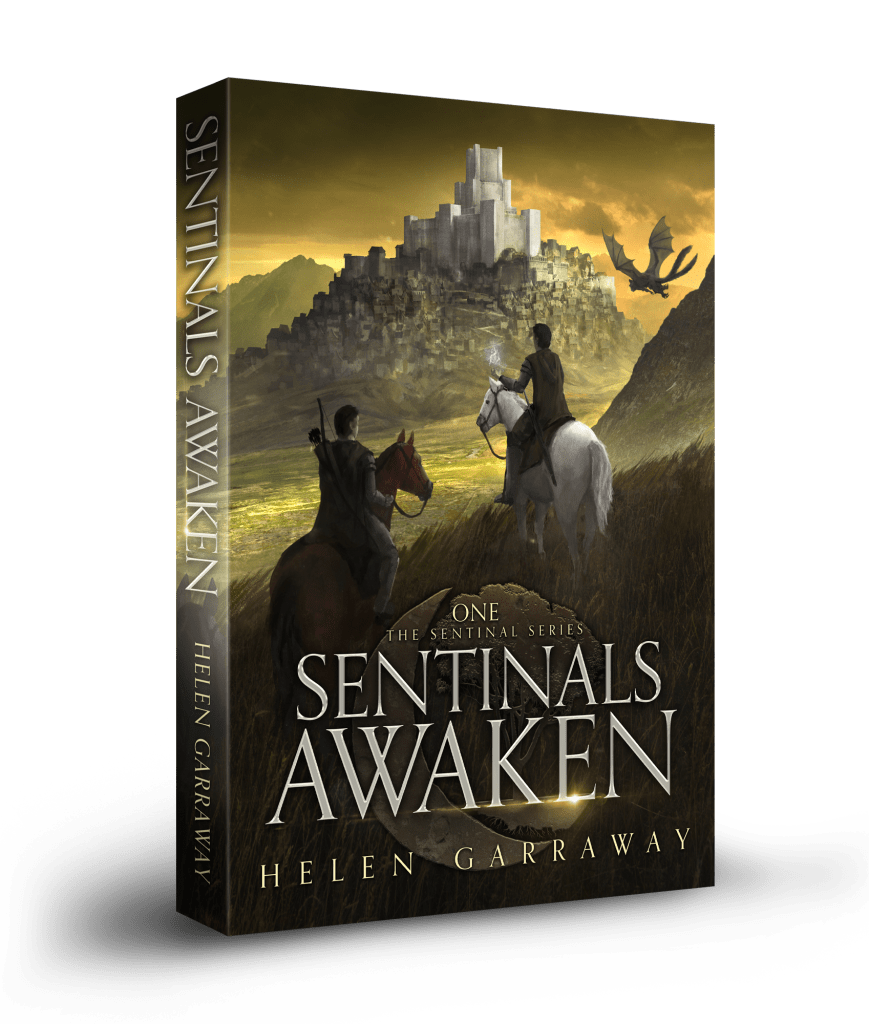
Readers’ Favorite recognizes “Sentinals Awaken” by Helen Garraway in its annual international book award contest, currently available at http://www.amazon.com/gp/product/1838155910.
The Readers’ Favorite International Book Award Contest featured thousands of contestants from over a dozen countries, ranging from new independent authors to NYT best-sellers and celebrities.
Readers’ Favorite is one of the largest book review and award contest sites on the Internet. They have earned the respect of renowned publishers like Random House, Simon & Schuster, and Harper Collins, and have received the “Best Websites for Authors” and “Honoring Excellence” awards from the Association of Independent Authors. They are also fully accredited by the BBB (A+ rating), which is a rarity among Book Review and Book Award Contest companies.
We receive thousands of entries from all over the world. Because of these large submission numbers, we are able to break down our contest into 140+ genres, and each genre is judged separately, ensuring that books only compete against books of their same genre for a fairer and more accurate competition. We receive submissions from independent authors, small publishers, and publishing giants such as Random House, HarperCollins and Simon & Schuster, with contestants that range from the first-time, self-published author to New York Times bestsellers like J.A. Jance, James Rollins, and #1 best-selling author Daniel Silva, as well as celebrity authors like Jim Carrey (Bruce Almighty), Henry Winkler (Happy Days), and Eriq La Salle (E.R., Coming to America).
“When the right books are picked as winners we pay attention. We will be spreading the word about Readers’ Favorite.” –Karen A., Editor for Penguin Random House
Readers’ Favorite is proud to announce that “Sentinals Awaken” by Helen Garraway won the Finalist Award in the Fiction – Fantasy – Epic category.
You can learn more about Helen Garraway and “Sentinals Awaken” at https://readersfavorite.com/book-review/sentinals-awakenwhere you can read reviews and the author’s biography, as well as connect with the author directly or through their website and social media pages.
Readers’ Favorite LLC Media Relations Louisville, KY 40202 800-RF-REVIEW support@readersfavorite.com https://readersfavorite.com
Book One of the Sentinal Series
Books in the Sentinals Series:
Novella o.5: Sentinals Stirring (Free if you sign up to my newsletter.)
Reviewed: September 16th, 2021 Released: September 15th, 2021 Genre: Dark Fantasy
Check out this new release, the second book in the Banshees Curse series.
Fight or flight… why not do both?
Cara is magic-bound by her promise to Cadan, keeping her in the fae realm. On the run from the power hungry King, Cara and her friends search for a way to stop him and bring back balance to Gon’an’rit. Still hurt by a recent betrayal and confused by her heritage, Cara struggles to find her place within her evolving life.
Perfect for fans of fated mates, enemies to lovers,complicated & diverse characters, slow burn romance, and celtic folklore.Read More…
Today I have the pleasure of chatting with fellow indie author Monique Edenwood about her Blackwood Oak series and all things writing and more! To start us off, Monique, tell us about your latest novel.
Monique: I’m currently working on book 4 (out of 5) of my Black Oak series which is a dark romance series within the genre of romantic suspense. The books is called Embers of Black Oak and is out on September 24th. At the crux of the series is a love triangle between the heroine Jessynia, the powerful and ruthless Jackson Wilder and his childhood friend and now sworn enemy, Cameron O’Neill, as equally powerful, dominant and damaged as his former friend. Both men love Jess to the point of madness and consider the other man dangerous. This triangle is the crux of the book, but as the series has unfolded, the subject of past trauma and how it affects our behavior has become one I’ve loved to explore as it’s a subject that is very close to my heart.
Helen: Not long now! Good luck with our forthcoming launch. How did you choose the cover design?
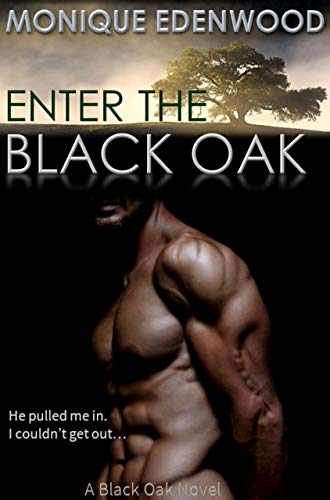
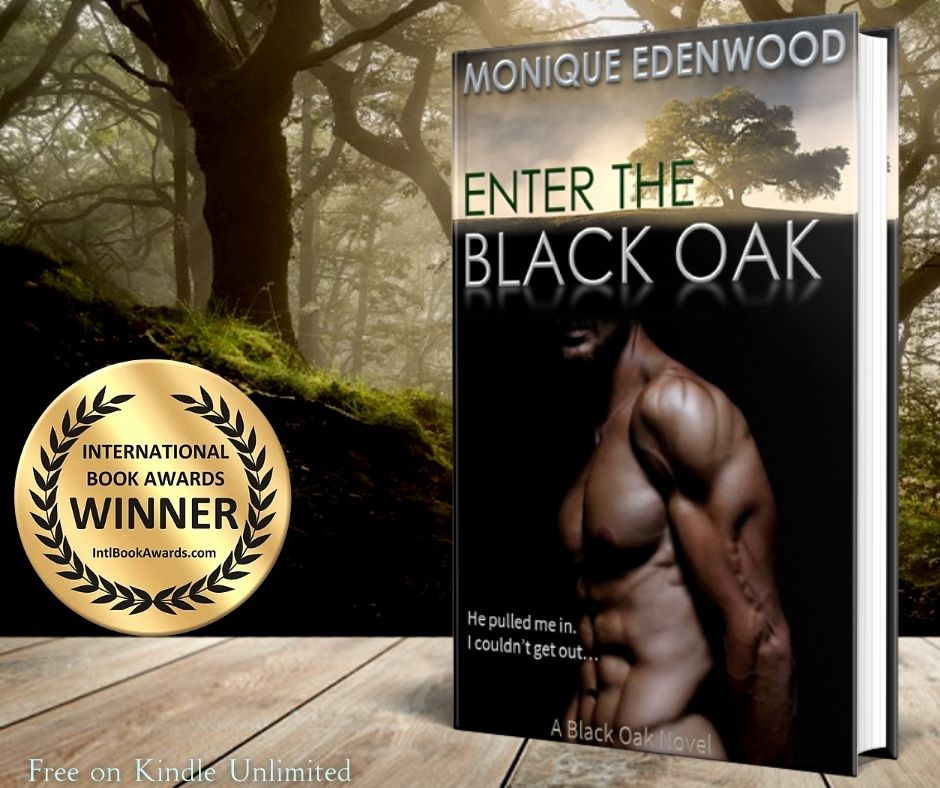
Monique: The cover of book one has a naked male torso on a black background with an oak tree bathed in dusky light at the top. My books are named after a dangerous secret society created by the outwardly respectable elite of Manhattan, the Black Oak Society or Quercus Velutina. I grew up surrounded by forests and have always been obsessed with trees and I knew I wanted the society to be named after a tree. After playing around with a few names and checking that Black Oak did not exist in this context anywhere on the web, I chose Black Oak as a recurring motif in the series titles. I came across the picture of the man randomly while surfing stock pics and it just spoke to me. The fact that he’s standing so self-confidently and that you can’t see his face just felt so powerful to me, and all my books have an element of black in their background to represent the Black Oak society, of course, as well as the darkness of this dark romance.
Helen: You have four books written in the Dark Oak series, how did you begin writing this series?
Monique: I have to say my series has been on quite the adventure because I originally wanted to write a dark comedy, along the lines of the British author Tom Sharpe—totally outside the romance genre—about a wife who discovers that her husband is cheating on her and doesn’t tell him she knows, but sets off on a journey to slowly ruin his life in every way possible while trying to help him deal with all the calamities befalling him. So sadistic, lol!
It was really supposed to be just total comedic escapism. Once I had done a tiny bit of research and saw that romance was the biggest genre, and once I brought down that self-defence mechanism that wanted to turn this story into comedy, I realized that I wanted to really deep-dive into the bloody guts of a faltering relationship in a way that was raw and real and made you feel and think and question what you would do in the character’s shoes.
The very early chapters of the book deal with infidelity, dropping you right into the moment when the heroine, Jess, discovers her husband’s secret phone, but this is really just a catalyst to bring in Cameron O’Neill, the third man in the love triangle. He’s been in love with her for as long as he remembers and wants to her save her from her marriage, but he has demons of his own and the story ends up taking a lot of unexpected twists and turns. Realizing how much trauma was at play in the behavior of the characters really let me explore this subject and I hope it has made the whole series more powerful.
Helen: What genre do you write? What made you choose to write in this genre?
Monique: I write dark romantic suspense. My favorite author is Sylvia Day and years ago when I first read one of her books after picking it up at a bookstore without ever having heard of her before, I remember resonating so much with her Crossfire series and how raw and brutal it was and how deliciously deviant the hero was. I was shocked by the language he used and how graphic it was, but when I started to write, I realized I wanted my series to be raw and make you feel, and I find I can do that best within the genre of dark romance.
One of the things I love exploring is the concept of duality. I love books that really make you think, throw you off balance and make you question what is right and wrong. I like to be shaken about a bit when I’m reading and I love doing that to my readers too! In my series, some of the characters behave in ways that are questionable, but it’s super important to me that they are still seen as human beings. I really don’t like to distill everything to just black and white, good vs. bad. I hate this way we have in the fictional world of reducing complex people to weak and strong or good and bad when most of us are a combination of these things depending on the circumstances.
When a character’s behavior is questionable, we may not like them, but then we learn about the trauma and abuse they may have suffered and perhaps start to rethink. So, to me, it’s important that books are not reduced to just tropes and that they take you on an emotional journey and really make you think and feel and question everything! Dark romance offers me that space as I don’t have to worry about how flawed the characters are. Messy and damaged characters with questionable instincts come with the territory and those are the ones I want to know the most.
Helen: It sounds like you have some very dominant characters in your novels. Who is your favourite character to write?
Monique: Sebastian Gravier. He is the head of the Black Oak Society and a dangerous sadist, murderer and prominent member of Manhattan’s high society. He is almost certainly an irredeemable character, but he is the most fascinating to me as unlike most psychopaths, he was not born that way. His soul and psyche fractured as a result of horrific and untreated narcissistic abuse on the part of one of his parents while the other stood back and did nothing to intervene, like a coward. The subject of parental abuse and narcissistic abuse is one that is not talked about enough in my opinion, so exploring this fascinating, dangerous, terrifying character and his origins has been just thrilling and very cathartic to me.
Helen: How do you get on with editing your books? Most writers prefer writing as it is more creative and freeflowing, yet editing you have to discipline yourself to look at every word.
Monique: I definitely prefer editing! I actually find the writing process quite painful but I am in heaven when editing. I love playing with words, rewriting sentences until they grab you by the throat or make you shudder from fear or pleasure.
Helen: Words are such fun! When not writing what do enjoy spending your time doing?
Monique: I am from the UK originally but have lived in beautiful British Columbia for several years as I have lots of family here. I love hiking through forests, writing under trees, swimming in the ocean, cycling, hot yoga and just being in nature and with my lovely friends and family.
Helen: Sounds lovely! I imagine reading fits in there somewhwere. Which books have your read recently that you would recommend?
Monique: I read the Tainted Love trilogy by RC Christiansen and it is so raw, so brutal and yet so beautiful. It just haunts me and even though it breaks a lot of the rules of romance, I highly recommend it. She’s just such a huge talent.
Helen: I have that trilogy on my tbr pile. I must find time to read it, but I know it will be raw and emotional, and I’m not int he right mindset yet. We’ve come to the end of time together, thank you so much for joining me. One last question. What advice would you give to new writers?
Monique: Thank you for having me!
I would say to really enjoy the writing process above all else and to realize that in the first year or so, your books are not necessarily going to take off. It will take some time to get traction and to become better known in the community. I’ve seen quite a few authors really suffer because they’ve been keen to have big sellers in their first year and it’s difficult in today’s highly competitive and saturated market. I would say to always write for yourself first, and I remind myself of that too when I read lots of opposing opinions about what the outcome of my series should be from my lovely group of readers.
It’s really easy to fall into the trap of writing primarily for the buzz of getting positive feedback from readers and I have actually seen authors post that that is the main reason why they write their books which I find so amazing. Don’t get me wrong, there’s nothing more glorious or uplifting than getting emails or messages from readers to tell you how much you’ve touched them with your books, but if you’re only writing for the high of having people read and tell you they loved it, then if they don’t, you’ll be devastated, and it becomes more about chasing the high of positive reinforcement at that point than about the joy of creating these magical characters that will live on forever. In the long run, if you write from your heart, things will always work out. If you write purely to get praise, that’s a dangerous place to be in.
I am so lucky to have really passionate readers who contact me on a daily basis, and who are very active in my Facebook group. Their support and enthusiasm is not something I expected to experience so early on in my author journey. They give me so much energy, even when they shout or sulk at me for things that the characters do, lol. However, they have some deliciously strong and opposing opinions and it’s easy to get lost in them, especially when you hate the idea of hurting or disappointing anyone.
That’s why your most important author relationship should always be with yourself and your characters before that with your readers, otherwise you will get lost trying to please everyone and second-guess yourself and your writing will suffer because of it, so staying connected to your characters above all else is the best way to make to make your amazing readers happy as well!
About the author:
I am the writer of the Black Oak Trilogy, the first novel of which is Enter The Black Oak. I love helping people escape their daily lives for a short while with the help of some intrigue, suspense and some smoking hot fictional boyfriends!
I am a British-Canadian author based in Vancouver, British Columbia and when I’m not reading or writing, I love hiking and cycling around beautiful Vancouver. I’m also an epic fantasy geek and lover of 80’s and 90’s music.
Reviewed: September 8th, 2021 Released: October 31st, 2020 Genre: Paranormal Mystery
Two worlds collide when Emily Swift turns thirty and her late father’s journal lands on her doorstep… Seventeen years after Emily Swift’s father died, a door is opened to a new world, an Empire led by peculiar men and women called Salesmen – transporters of magical items. These Salesmen have the unique ability to travel from place-to-place, and even world-to-world, simply by stepping throug
Now that Emily is thirty, it turns out that she can “door travel” too, stumbling unplanned into kitchens, bathrooms, and alleyways as her connection to the Salesman Empire is revealed. Fueled by the cryptic notes and sketches in her father’s journal, Emily discovers the real reason behind his death: he was targeted and assassinated by the Fringe, a terrorist group of rogue Salesmen. Read More…
Reviewed: September 5th, 2021 Released: September 1st, 2020 Genre: Fantasy
Artist Matthew Sugiyama can alter the physical world with his art. As the top student graduating from the prestigious Popham Abbey, Matthew Sugiyama’s future is secure… until he bucks convention and begins a journey to find answers about his birth family. The trouble is, he doesn’t know who or where they are.
Determined to find answers, but without a clear destination, Matthew sets out on horseback across a post-technology world, guided only by random flashes of a vision or long-buried memory. Using his skills as an artist to barter for hospitality and supplies, Matthew soon learns his sheltered upbringing has left him wholly unprepared to face the obstacles on the road or his unexpected yearning to join the communities he encounters. When he uncovers a mysterious adversary’s plan to harm the people he’s come to care for, Matthew must decide what’s more important; the adopted family he has created, or his need for answers about his past.
And once it’s revealed, it could tear this world apart…Read More…
Join me as chat to Philip J Dennis about his novels and all things writing and more! To start us off, Philip, tell us about your latest novel.
Philip: My latest book is The Wrong Apocalypse. It was released back in February. It was an idea for a story I had years ago, before I had even started writing. It was simply a funny premise I had. People trapped in a sex shop during a zombie apocalypse. It’s just ridiculous enough to be funny. It wasn’t until I had been struggling with another story that this one came back to me. With the whole pandemic that I thought my zombie book was a little relevant. People trapped in doors, unable to see family and friends, communicating only through social media, only going out when strictly necessary. Throw in some references to real life and how different people handled or reacted, it practically wrote itself.
Helen: It’s weird how a pandemic can make crazy ideas seem reasonable, isn’t it? I love the fact the book practically wrote itself. The ideal type of book! How about the cover? Was that as easy to design?
Philip: When I had written my first book, Isaac’s Fall, I had no idea about cover design. I had images in my head of what I thought it should look like, but no way to pull it off. I could have paid for someone to design a professional cover but I couldn’t justify spending money on this hobby when there are bills to pay. So, I discovered Pixabay, and instead of getting an image of a person for the cover (I couldn’t find one that I liked anyway) I chose a silhouette. I used the same style for books two and three, and by the time I had completed the wrong apocalypse, I kind of felt that it was my style, my thing.
The cover of The Wrong Apocalypse was a group photo of me, my wife and some friends, edited to simple shadows with an abstract background of hues of red. It seemed to fit the tone of the book and my style of cover.
Helen: It’s actually quite eye catching, the more you look the more you see. The title sounds very apt for the novel. How did you come up with it?
Philip: The title came from the number of memes circulating during the pandemic, complaining that we were promised zombies for the end of the world. Basically, we were given the wrong apocalypse. It didn’t take long to come up with the title. It was the first idea I had and it stuck. I was opened to changing the title should I think of a better one, but I never did think of anything better. People seem to like the title. I’ve had people hear it and be intrigued.
Helen: What made you start writing? That moment when you first put pen to paper?
Philip: I started writing back in ’08, roughly. As corny as it sounded, I had a dream, a really vivid dream but just one scene long. As is usually the case when people dream, you’re already aware of the context and background. I don’t know if anyone else does it but sometimes I cast people in dreams. It might be family or friends, or in this case, Dennis Hopper was the character. Why him? No idea. I remember thinking though, at the time, I hadn’t even been watching him in anything. I told my girlfriend, now-wife, Jan, about the dream and the backstory, and she thought it was really interesting. She said that would work as a film or a book. I won’t go into the details of it, I might come back to it one day.
Anyway, I started to write it. I had no story arc, no bullet-pointed plan, just wrote to see where it took me. A little while later, Jan and I were talking. She said that she had started to write some stuff based on my dream.
I was like, “Yeah. Cool. Me too. How much have you written?”
Jan said, “Only about two pages. What about you?”
I replied, “About sixty pages.”
I never did finish it. Well, I did, but nothing that was any good. The core idea is still good. I might come back to it. But writing that book got the ball rolling. From there, I started Isaac’s Fall. But this time I knew to plot out the story first. Sometimes, you need to know where it’s going. Or at least know the next few steps. There have been some WIP that never panned out. Even though I might have felt the story was good, I didn’t enjoy writing it or that it was too big for me.
Helen: What is your work day like? How do you fit writing into your daily life?
Philip: Any writer will tell you that routine is the key. And they would be correct. But sometimes, you need to snatch those moments of peace and quiet, and of inspiration when they come. I try to do some writing on my days off from work, between household chores, and when motivation strikes. Sometimes, it might be an hour of a night after my son has gone to bed but before exhaustion kicks in.
Helen: Finding time to write is the challenge. I have notebooks all over the house for when inspiration strikes. The odd scene out of the blue, and you have to capture it before it slips away. When writing do you listen to music? Or do you prefer silence?
Philip: There’s a saying, which I’ll now butcher, about the biggest part of writing is done away from the keyboard. I walk home from work most days. In that time, I listen to headphones. Spotify. Sometimes, a lyric from a song can paint an image for something that I’m working on. I was listening to Short Change Hero by The Heavy, and the music reminded me of a western, and a lone man walking out to meet a posse of outlaws, with no hope in the world of surviving. I thought that image would work well in The Wrong Apocalypse. A lone character, walking through the centre of the outdoor shopping centre, essentially sacrificing themselves for the rest of the group. The scene was never used in the book. I couldn’t find a way to make that fit logically, and I wasn’t going to force it in just for the sake of it.
But I’ve listened to different bands depending on the book. Isaac’s Fall, I listened to Slipknot. Harmony’s Choice, I listened to Evanescence and Noel Gallagher’s Highflying Birds. They become a, sort of, internal soundtrack to the books, helping to set the tone.
Helen: Some interesting choices, thank you for sharing them. Where do you find you are most productive, where you write the most?
Philip: Best place to write is not actually at a desk or a table. I spend my workday at a computer, at a desk, I don’t want to do the same when I get home. For me, it’s on the couch, feet up, laptop on my knee. As comfortable as possible for as long as possible. The last thing I want to have to do is get up because my back is aching or I start getting a crick in my neck. If there are some snacks in reach or a cup of tea or coffee within reach, then even better.
Helen: Having written a few books, have you found yourself writing in one genre?
Philip: I don’t want to stick to writing in one single genre. Why limit ourselves? The Wrong Apocalypse is a horror/comedy. The trilogy I wrote is more of the thriller/supernatural genre, and I wrote a children’s book for my son, featuring him as the main character, which falls into fantasy/fairytale. I mentioned earlier about struggling with a story/ that was in the genre of a fictional biography, if that genre exists. I’d like to finish that one day, but I don’t know if it will happen. I don’t think I would want to deep-dive into sci-fi but maybe splash in the shallow end a little. The very first story I mentioned, that was a sci-fi thriller.
Helen: Most writers are great readers. What have you enjoyed reading recently?
Philip: I’m a very slow reader. My wife Jan inhales books. But because I’m a slow reader, I can be a bit picky with what I’m going to spend my time reading. I’m currently reading Ready Player Two, having read the first last year. I’m less than half way through but enjoying it. The film was very different from the first book, and I knew this going into the book. I’d seen the film first. But the book still holds up and it made me want to see how the author built on that world, and where he would go with it. Was it going to be a natural progression of the story or a cash-in given the recent Spielberg film? I haven’t finished, so I can’t say yet.
Helen: Is there a book you recently finsished that you would recommend?
Philip: I would certainly recommend Matthew McConaughey’s Greenlights. I’m not a biography person. I had only ever read Bryan Cranston’s biography before this. Greenlights is positive and funny and inspiring. I had heard some reviews stating it was too self-involved. I think that someone needs to explain the purpose of a biography to those particular people. My only regret with Greenlights was that I should have listened to the audiobook instead. Years back I had tried to read Corey Taylor’s Seven Deadly Sins. A book of stories and rants. I never finished it. The audiobook, on the other hand, is much better. Sometimes, hearing people tell their own stories or going on their rants is the best way.
Helen: I have Greenlights on my tbr pile, which is much too high! Who is you favouite author?
Philip: Hands down, Neil Gaiman. American Gods is probably my favourite book. Good Omens is also fantastic. Coraline, The Graveyard Book… He’s written comic books… Sandman… This is an author who doesn’t stay within a set genre. His writing style can be simple and to the point or detailed and layered, depending on the story. If people haven’t read any of his work, that should be the next thing they do, or maybe right after they read The Wrong Apocalypse.
Helen: Sounds like, if you like Neil Gaiman, you’ll like Philip J Dennis! It has been a pleasure chatting with you today; thank you for sharing your authorlife with us. Just to finish, what advice would you give other writers?
Philip: I barely consider myself a writer but if I had to give anyone advice, it would be to do it for the enjoyment, for yourself first. Some people want to write to be rich, to be famous, and, sure, we would love for that to happen, but you’ve got to love what you’re doing first. Sometimes I need to remind myself of that, I’ll admit it. Not even the money side of things, really, but just to know that people are reading my work, that they are enjoying it. Everyone needs acknowledgement. It’s basic human behaviour. But you need to recognise this and remember that your own enjoyment of writing is paramount.
About the author:
I am 39 years old. I live in Liverpool, England, with my wife Jan, and 4-year-old son Jacob. I currently work in a contact centre, though this is not for much longer due to redundancy. I’m currently taking a copywriting course in the hopes that this might lead to something interesting, new and enjoyable.
I started writing about 13 years ago but only published my first book just over four years ago. The only person that knew I was writing was my wife Jan. Why only Jan? Simply put, it’s better to fail without an audience. It’s a very pessimistic outlook, I know.
I’d love for my books to become big enough to be a sustainable income, but at the end of the day, I enjoy writing, and if there are some people who enjoy reading them, then that is great too.
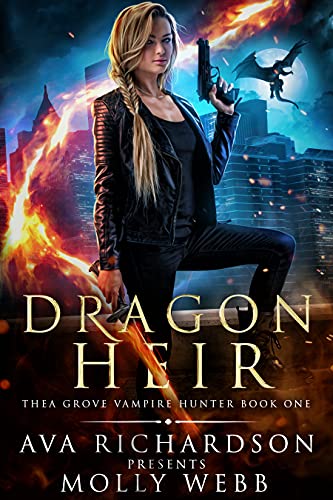
Reviewed: August 31st, 2021 Released: August 11th, 2021 Genre: Urban Fantasy
My name is Thea, and I’m a monster hunter. Or a monster, depending on who you ask…
My dad trained me to be tough and ruthless, so I could replace him someday as head of our shifter clan. Then I discovered my father wasn’t the man I thought he was. So I went freelance instead. Now, I fight for the underdogs my dad used to exploit. Sure, I get paid. But I don’t do it for the money…
So when a rogue werewolf I’m hunting turns out to be innocent, I want to know who framed him, and why. His name is Marcus, and with his broad shoulders and piercing eyes, he can certainly take care of himself. But someone wants him dead. And I want to keep him alive… At least long enough for me to figure out what he’s hiding.
Because Marcus is more than just your average shifter. He’s something much stranger, and much more dangerous. An ancient secret lurks behind his fierce, smoldering gaze.
And once it’s revealed, it could tear this world apart… Read More…






 Helen Garraway